The Psychedelic Poet

I’ll start with caution by saying that it’s still a surprise to me that I have been doing poetry for the last several years and that I have been recognized as a poet. It’s a surprise because I have been a comedian since 16 and five years ago, I went onto a spiritual path that has led me to explore my own healing through ceremonial plant medicine/psychedelics and mindfulness. So now at 33 I have surrendered into my own gifts with regards to the work of holding space.

I can’t tell you about the different genres of poetry or give you a list of the most influential poets in history. I can’t write a poem based on a theme that you give me, or better yet I refuse. My grammar is seemingly nonexistent, my spelling still haunts me, and I never liked English class. Now here’s a few things that I do know…I know timing from doing comedy. I know how things should sound from my love of music. I know what I have seen in my own experiences with psychedelics, love and my relationship with the spirit realm. I know there is some invisible thread from the shamans, mystics, medicine men and women to the song writers, story tellers and poets.

I feel this lineage in a cosmic sense deep beneath my skin. And lastly, I always know where my heart is coming from. This is what gives me the confidence to step on stage along accomplished published poets and academics. I am not going up there to read a poem. I’m going up there to pray.

About two or three years ago when I was at a plant retreat while going through heart break I remember being around the fire with some of the guys and someone asked, “Does anyone know any poems?” My eyes went from staring into an abyss to him as if he just threw me a line to get back. I recited two poems of mine and then the third was Charles Bukowski’s “The Laughing Heart.” I’ll never forget one of my brothers in this community said, “Mike, when you spoke it was like the moon went out.”
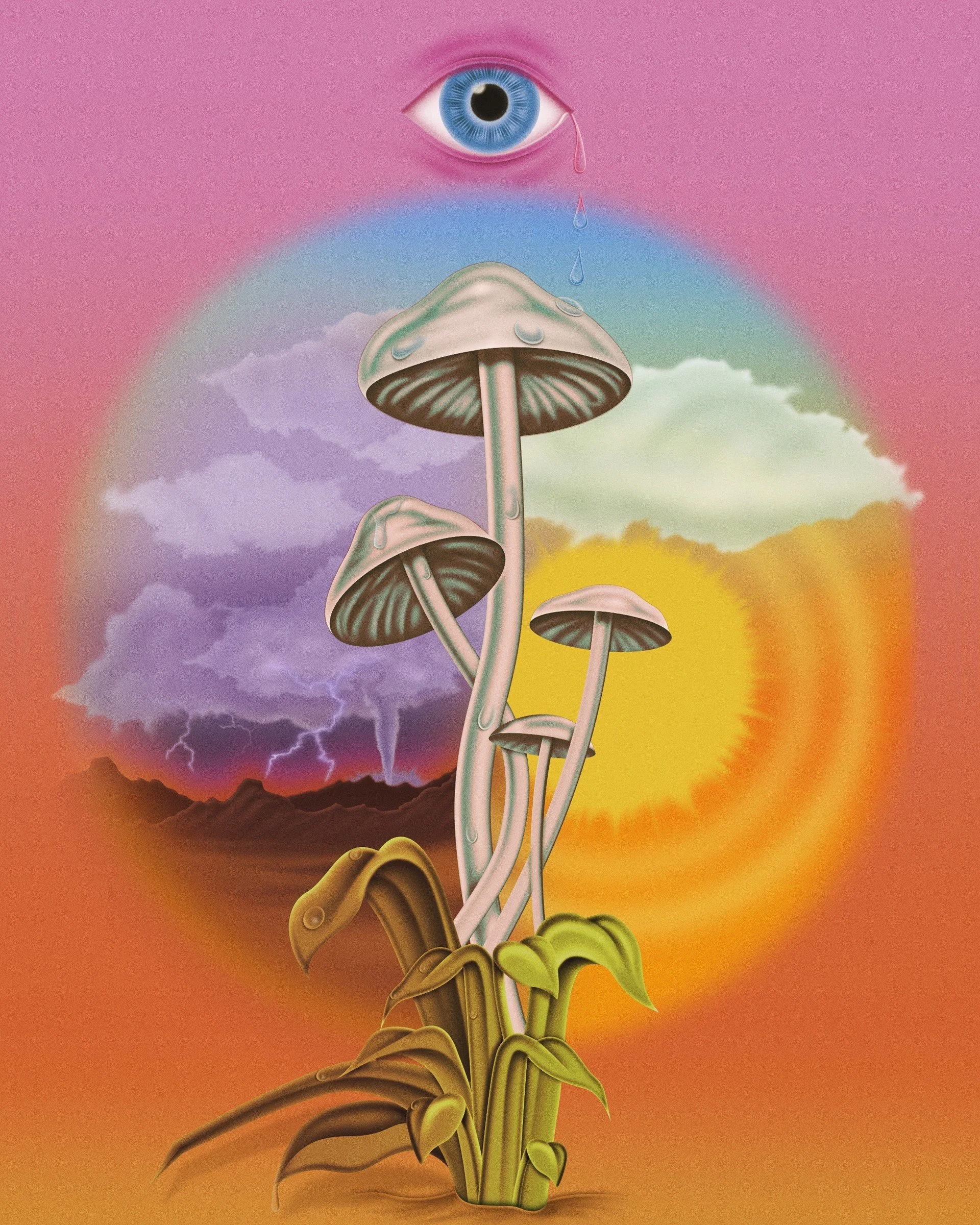
As time went on and I kept going to the retreats, I started to then get asked if I could do a poem or two…this would always be spontaneous as the night went on and we were all very much feeling the plant medicine. In the beginning I remember how surprised and curious I was when I’d get asked. I was hyper-aware that I didn’t want to make it seem like I was taking over the space or getting too performative. This is a space I respect dearly; it is holy ground to me. But whether the community knew it or not they helped me get over this. Because every time people asked me, it was as if they gave me an invitation to step more into myself, my power, my own visibility and my own voice. I’ve read that in history, depending on the culture, shamans didn’t bestow that title upon themselves. Instead, they received that title only if their community saw them as such. I feel like my community at those retreats had given me the title of poet (and wizard being another one). Also, I think what surprised me the most was how it made total sense for me to be doing this; it’s a combination of two of my favorite things. Its sharing my words and holding space for people during their experiences. This was a beautiful handshake between the two.

In those moments it felt like the planets aligned.

I think one of the main reasons I was asked if I could write about this is to talk about what it’s like for me when I’m doing poetry for people in such spaces while I too am experiencing the medicine. And since I have been doing this a lot, I’ll try my best to share what it’s like only on my end.

I’ll be somewhere in the space, be it laying down or walking around checking in on people, and someone might bring up that I’m a poet. If it’s a moment where they don’t bring it up, but I feel something energetically calling me to share then I would ask if they would like me to do one for them that feels right based on how they tell me they are doing. I make sure to say it’s just an invitation, so that they can always say no or if they’re not feeling it’s the right time.
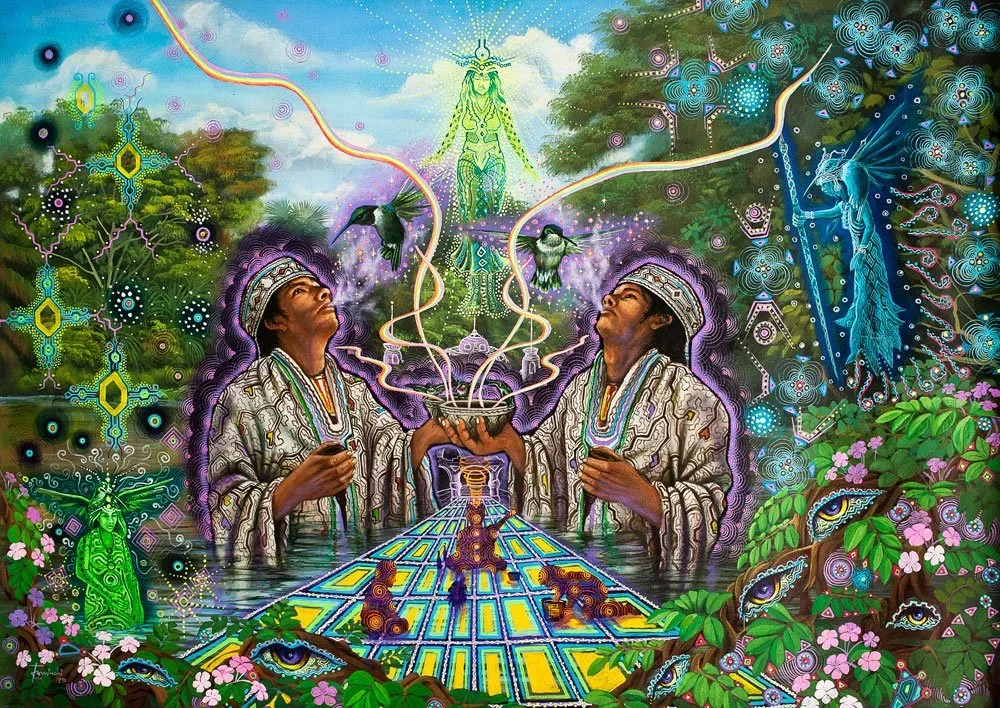
But if they do ask then this is what seems to happen. I usually find myself kneeling. I allow a bit of silence (that silence is where my words swim). I gather my mind trusting I will remember the words, and then I take a breath. It’s as if that breath is taking us into this poem, this small pocket of time, this realm, together. There’s no reading and I don’t feel like I’m reciting it…I’m simply allowing it. This may even look like I’m just having a conversation until you notice the words are rhyming. I’ll try to compliment whatever music is playing in the space. I do my best to lock into a pace that feels right for whoever I’m doing this with (not doing this “for” but doing this “with”). I know that like myself, their senses are very much heightened, so I become very aware of the rhythm, when to pause, and how my inflection is while letting my hands feel this energy. I don’t pretend to have any knowledge of what those hearing this are feeling. I can only control my intention. Letting each word out with love and a positive vibration behind it. I can even find myself getting a bit emotional because I am always reliving whatever inspired the poem in the first place.

Depending on the piece I often feel like each line is shedding more of me away…from my skin and my muscles to my bones to my soul and then releasing my spirit into the air. I always see those who I’m doing this with (be it at retreats, poetry mics, senior centers or a one-on-one) close their eyes and have this pleasant restful smile, slowly nodding it’s as if they “know.” It is a knowing that is magical and mysterious. Simply recalling these memories from my point of view, as I’m typing this, is making me tear up. It is an absolute honor for me to do this for people in those moments, and I am so grateful to have been called time and time again to share my words, my offerings. This is my service for my time here in the universe.

So, who am I now? What am I becoming? Comedian? Poet? Healer? Wizard? What the heck is all this?

I think a lot about George Carlin’s 1996 conversation with Charlie Rose. “Arthur Koestler said in The Act of Creation said that sometimes the jester can traverse the triptych. And if the jester says something funny, well, he’s a jester. If he says it in marvelous language that we say ‘oh isn’t that a nice way to put that’ then he’s a bit of a poet. And if there’s an underlying idea underneath the well-put funny line, if there’s a bit of a philosophy there, he comes something else again: a philosopher. Now one doesn’t sit and attempt do that with everything he writes but to know that that’s part of the package, to know that you can do these three things in varying degrees.”

With all that said, I look forward to continuing to honor this path that has found me. And to do my best to allow myself to grow further into this.
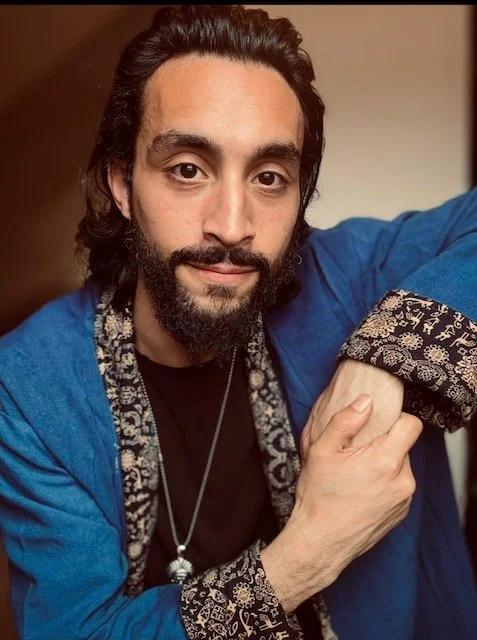

Michael Pagano

is a poet, mystic, and comedian who has been studying the magic of retreats for healing. His goal is to share his words on stage for larger audiences as well as leading his own retreats.

You can find him on TikTok and YouTube


G&E In Motion does not necessarily agree with the opinions of our guest bloggers. That would be boring and counterproductive. We have simply found the author’s thoughts to be interesting, intelligent, unique, insightful, and/or important. We may not agree on the words but we surely agree on their right to express them and proudly present this platform as a means to do so.

Policing, Performance, and the Mask of Federal Authority

Sociologist Erving Goffman argued that every social action is organized around performance: roles, scripts, stages, costumes, and masks. In Minnesota, the recent deployment of federal immigration agents has revealed how dangerous that insight becomes when enforcement slips from public service into theater.

Immigration and Customs Enforcement was created to enforce immigration law, not to operate as a public-safety agency in densely populated neighborhoods. Yet under the current enforcement surge in Minneapolis, ICE agents have assumed precisely that role. They are armed, uniformed, and empowered to make split-second life-and-death decisions on city streets. The result has been a series of fatal encounters, including the killings of U.S. citizens, that expose the deadly consequences of turning civic authority into performance.

Cultural scripts amplify this danger. Generations of Americans have grown up immersed in simulated combat—video games where hesitation is punished, morality collapses into a kill or be killed environment, and avatars reward aggression. Players rely on speed and decisiveness, not reflection and restraint. When ICE agents shaped by these virtual scripts enter real-world enforcement, the lessons of the game can collide tragically with the moral and tactical demands of policing civilians.

The ICE uniform compounds the problem. Tactical gear, weapons, and badges do more than equip officers; they function as a mask. Behind it, individual responsibility blurs, empathy dulls, and civilians are more easily reduced to threats. The agent becomes a character in a high-stakes performance, where escalation is scripted, and hesitation is failure.

These patterns have real consequences. ICE agents are trained for detention and compliance, not for civilian policing in volatile public spaces. Paired with militarized costumes and cultural scripts that valorize aggression, the role leaves little room for patience or reflection. Waiting becomes a weakness; escalation becomes inevitable.

Alternatives exist.

Agents can create distance instead of closing it. They can disable vehicles instead of firing into them. They can wait for backup, clarity, or for tension to dissipate instead of grabbing their guns. The scripts these men are permitted to follow have no repercussions, therein lies the tragedy. The avatar hides everything.

Minnesota demands more than accountability after the fact. It demands a reconsideration of the role itself. When federal enforcement is staged as a performance of power, when cultural scripts normalize decisive violence, and when the uniform becomes a mask that obscures moral responsibility, tragic outcomes are inevitable.

Public safety is not theater.

It is a civic responsibility that requires humility, restraint, and the courage to step offstage. If we cling to the mask of authority, violence will not be the exception—it will be the expected ending.


Andrea Stulman Dennett

earned a B.A. from Tufts University and a Ph.D. from New York University’s Department of Performance Studies. She studied under Brooks McNamara, Richard Schechner, and Barbara Kirshenblatt-Gimblett. She spent nearly two decades teaching graduate-level Performance Theory, dedicated to reshaping how performance is understood and experienced.


G&E In Motion does not necessarily agree with the opinions of our guest bloggers. That would be boring and counterproductive. We have simply found the author’s thoughts to be interesting, intelligent, unique, insightful, and/or important. We may not agree on the words but we surely agree on their right to express them and proudly present this platform as a means to do so.
Art & Design

Like twins fighting for their mother’s attention, art & design have always had, at best, a symbiotic relationship. And like many twins, people have trouble telling them apart.

To address this as effectively as possible, I incorporated this exercise into my design history course. The first assignment is “Book of Kells” - art or design? To further that discussion, we first established a simple definition for both art & design. We decided that art is “anything that provokes an emotional response.” As Mark Twain supposedly said, “I saw a man spit over 20 boxcars, now that’s art.” Or the ever-popular belief that “art is in the eye of the beholder.” That doesn’t mean everyone is qualified to declare what art is. It just means that without the viewer, it may not be art. Art occurs when the viewer responds to the piece, like the tree falling logic. A painting, a sculpture, a print, a photograph, good music, a good meal, a fine night out, it is all art. If it evokes a feeling, it is art.

The design definition we agreed on was “anything that serves a purpose.” So whether it is an industrial design, architectural design, automotive design, or visual design, if it successfully serves a purpose, it is design. And here comes the argument, and even worse heresy, while “design” is often seen as a subset of “art,” just a part of the process, it is actually the opposite. This occurs because many people confuse design with composition. A painting, a drawing, a sculpture, or a photograph can have a good or bad composition. That composition is the byproduct of design; it is not design itself. Design is about creating a solution to a problem - the purpose behind the work.

And here is where the rubber meets the road - if art is “anything that provokes an emotional response,” and design is “anything that serves a purpose,” wouldn’t art be a subset of design? Isn’t the purpose of art to evoke an emotional response? And since design is a structure under which all things that serve a purpose fall, isn’t it logical to conclude that art is a subset of this category? Yikes! Blasphemy? Not really- because as Dr. John Maeda is quoted as saying, “The sciences are what we do to enjoy art.” Yes, enjoying art is the reward, but so can be doing the sciences.

Back to the “Book of Kells” argument. Which is it - art or design? If you are not familiar with the Book of Kells, here is a quick definition from Trinity College.

The Book of Kells pages are decorated with bright colours, elaborate knotwork, and detailed illustrations of animals and mythical creatures. The manuscript is a wonderful example of the artistic style known as Insular art. This style is characterised by intricate detail, patterns, zoomorphic and curvilinear motifs, a vibrant colour palette. The manuscript measures 13 inches by 10 inches. Originally bound in a single volume, the Book of Kells was later divided into four volumes. As a complete gospels manuscript, it contains the four Gospels of the New Testament (Matthew, Mark, Luke, and John).

When we raise the question, “Did the Book of Kells have a purpose?” the answer is always, “Yes. To advance Christianity in a pagan world.” Since most people could not read, they used images over the written word and even animalistic images to portray the disciples. This is supposed to allow for the transition from paganism to Christianity. So again, purpose. In the case of the Book of Kells, the purpose was derived from using art to convey the message of importance and simply to create awe. Here again is the symbiotic relationship, but we must agree that purpose drove the creation of the artifact.

Now we step towards fine art, where composition replaces design as the governing feature. In many cases, with representational art and especially in the art of the Renaissance, you see a triadic harmony occurring. By this, we mean a constant movement from the main object to subdominant objects that leads the viewer in a triangle of motion in order to keep the viewer from “leaving” the page. This is done so that the viewer maintains the subject as the message. Even in something as meaningful as Michelangelo’s “Pieta,” the blessed mother is holding the Christ figure across her lap with her head, his head, and his feet completing the triangle. The viewer is contained within the triangle to keep the message in the forefront of the work.

As we get to modern art, this format slowly dissipates, especially in Abstract Expressionism. The most well-known of these artists may be Jackson Pollock. His rhythmic work doesn’t so much rely on composition as it does on the harmony of all elements through a personal motion. Here, design is seen through intent and not composition. In his Life Magazine interview, when asked about the subject of his paintings, Pollock responded,

“Today painters do not have to go to a subject matter outside of themselves. They work from within.”

Therefore, the work is fulfilling the design choice, regardless of the composition.

In visual design, the purpose and message are always the intent. Whatever the requested message or the intended message, the design must fulfill that purpose if it is to be successful. There cannot be opinion; there must be consensus. If we are looking to portray a brand, as in advertising design, the design must successfully portray the benefits of that brand. Typically, this is done most simply and concisely. The embodiment of simplicity in advertising is the “Got Milk” campaign. Two words, one image, and it has been successful for over 30 years. In all other forms of visual design, simplicity reigns. “Just Do It” - the FedEx logo - MasterCard’s “priceless” campaign. All simple concepts are met with simple images. All meant to convey a specific message. All is counting on a group understanding and agreement. This agreement makes the world go round.

Today, the most common form of design that we interact with is user experience design - or UX. UX is employed to build and develop apps and websites, or any form of digital environment. All phone apps or even streaming interfaces are examples of UX design. Here science meets design.

Usually requiring the deployment of technology, success is achieved through iterations. User interface elements are also developed - usually based on the metaphor - such as “$” for banking, notes for music, etc. Together with coding, these screens and icons aid the user on their journey or goal. Unlike gaming environments, app or web environments depend on a “frictionless” environment to be successful. Planning and iteration are extremely important to the process. Like an architect planning each stage, the UX designer needs to be inspirational and functional. Here is where the connection between art and design deepens.

Personally, the highpoint of art meeting design is the Guggenheim Museum. Designed by the holy father himself, the architect Frank Lloyd Wright, this building’s purpose is to give the most space possible to showcase artwork in a very crowded area of New York City. Wright does it with the perfect solution - the corkscrew spiral. At no point does the continuity break. The viewer is brought on a journey of never-ending steps until voilá, you are back where you started, ready to start again. A beautiful clean design allows the viewer no obstructions or containment in order to enjoy the art - the purpose of the design. This is to me the epitome of art and design. As Maeda said, “We do the sciences to enjoy the art.”


Patrick Aievoli

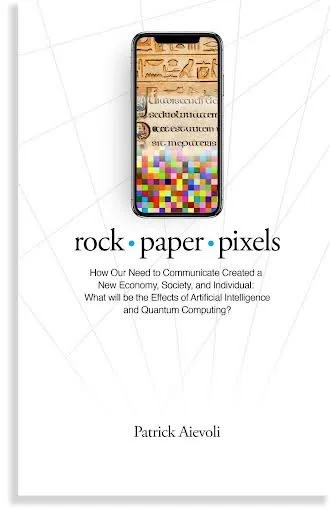
is the Chair of the Art, Design, and Game Development Department at Long Island University Post campus. Click here to get his most recent book - “rock•paper•pixels” published by Taylor and Francis, 2025.


G&E In Motion does not necessarily agree with the opinions of our guest bloggers. That would be boring and counterproductive. We have simply found the author’s thoughts to be interesting, intelligent, unique, insightful, and/or important. We may not agree on the words but we surely agree on their right to express them and proudly present this platform as a means to do so.
The Intangible Human

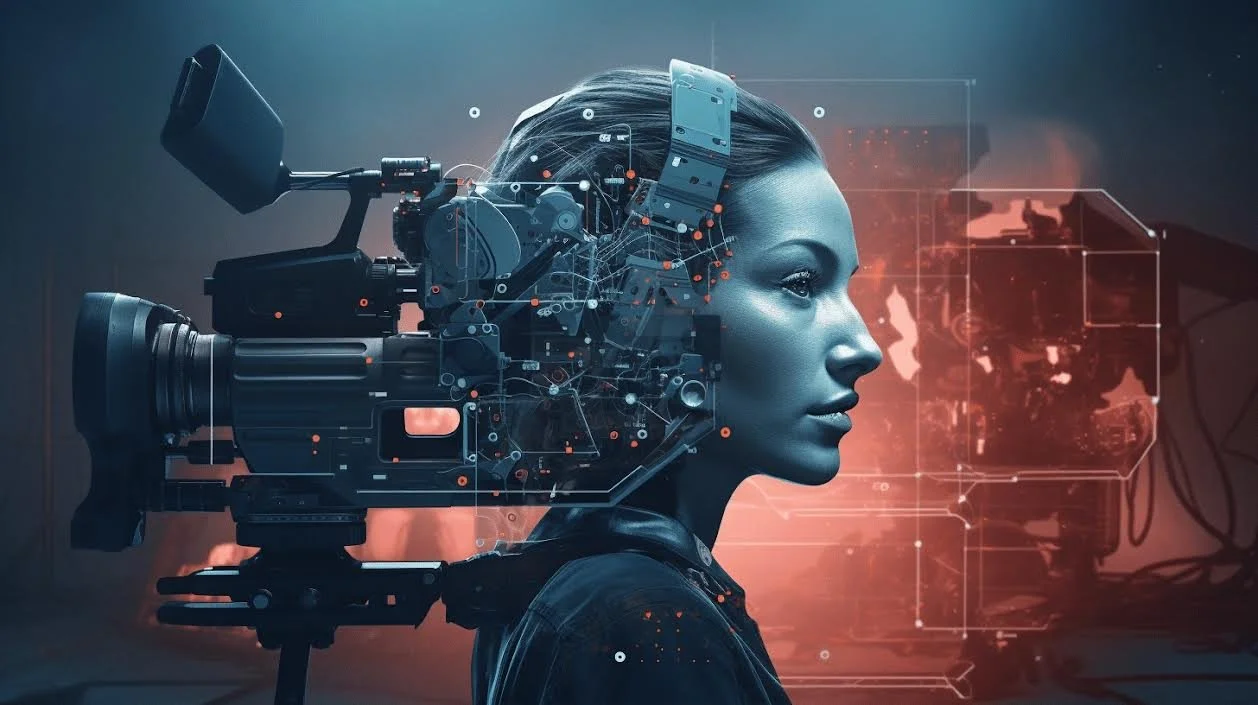
The big buzzword in so many fields now is AI. Be it in silly conversations with Chat GPT or a similar knock-off, inserting oneself into a goofy video, or having it help you create a whole plan for your next project; its clear that AI is now a part of the landscape. This includes within the field of film.

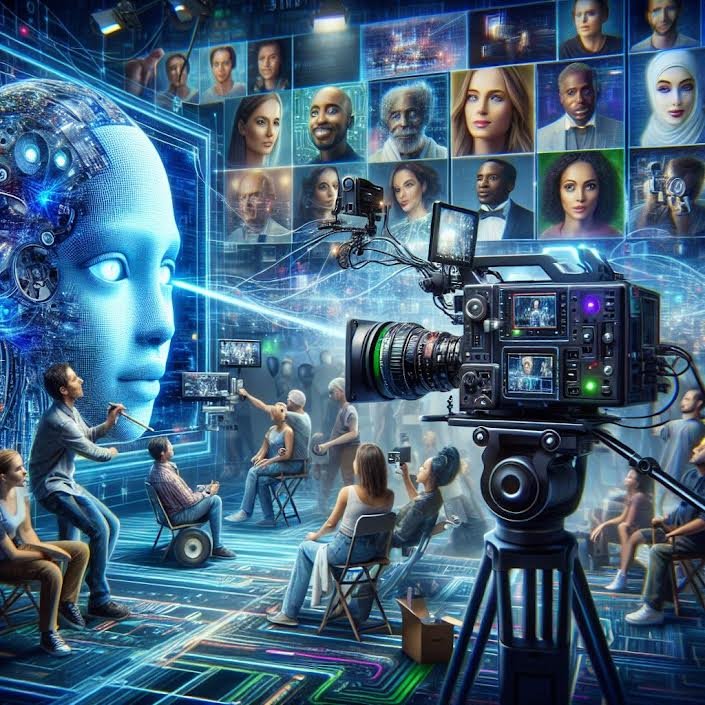
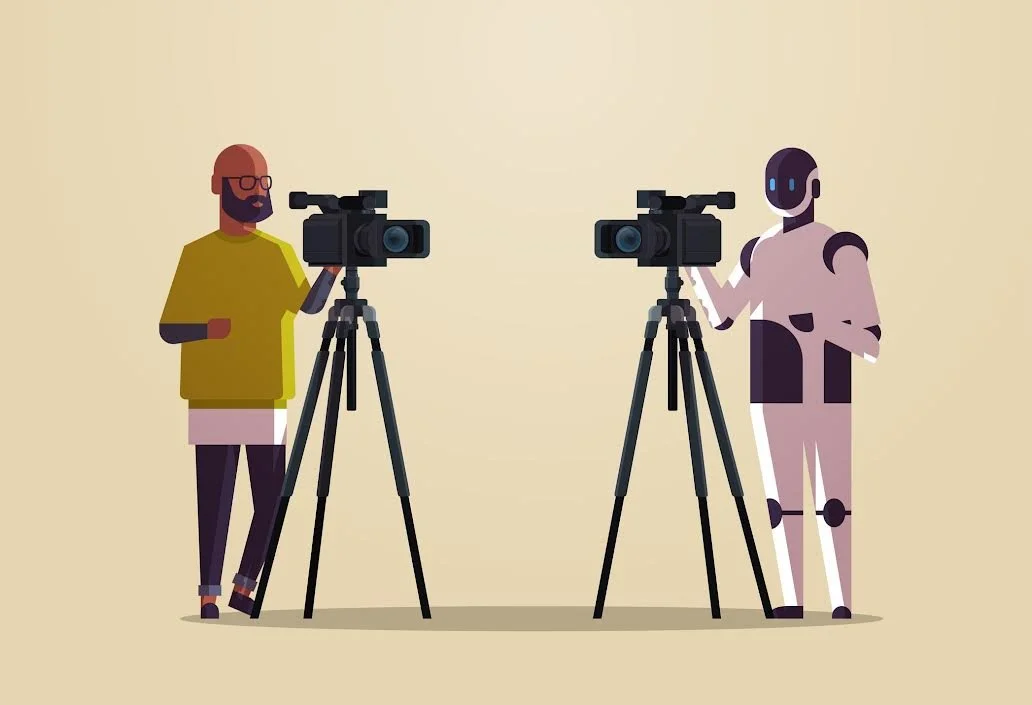
Some people think of AI as this boogeyman that is going to scare away all the jobs that have employed hundreds of thousands of people for years. Robots replacing the cameras, artificial avatars taking the place of an actor: the list goes on. There is a lot these AI programs can do and there is an argument that some of them, especially in the editing space, speed things along to a degree, but stopping the conversation there would be a mistake.

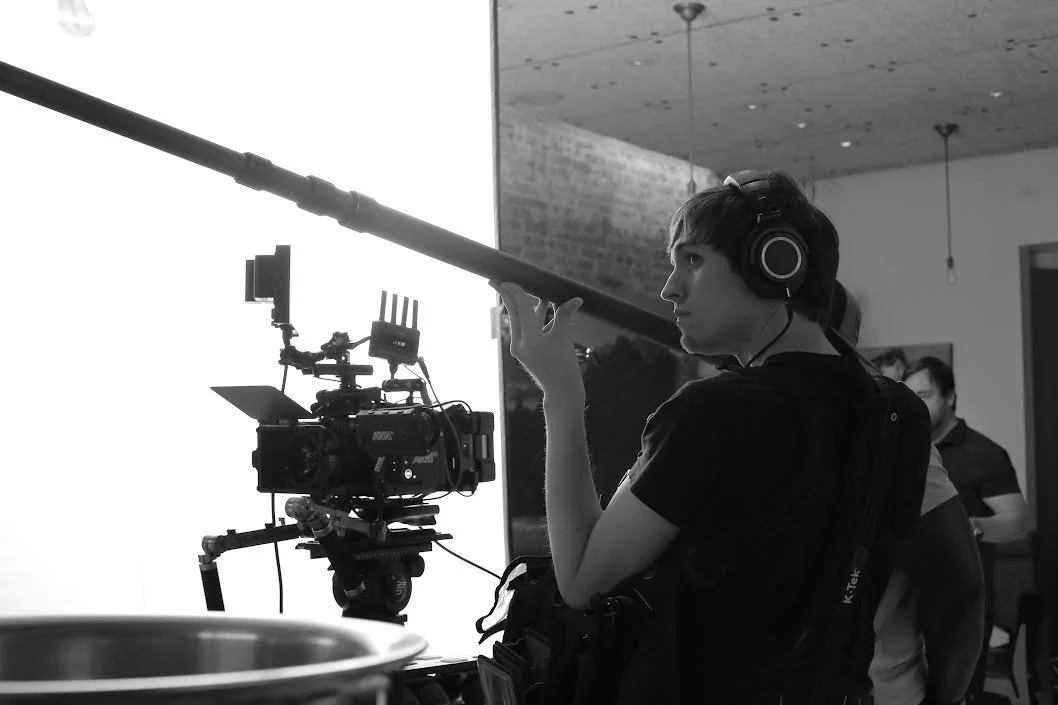
There is an intrinsic nature to a film set that cannot be quantified with a dollar amount: people.

People may not be able to do certain tasks as fast as AI for certain things, be it on or off a film set. But the nature of a film, be it a narrative project or a smaller-scale commercial, is so unique. A group of people, many of which may be meeting for the first time, come together to create some form of art. It may last one day, it may last a month or more, but once it’s done they all go off in their own direction, perhaps never seeing each other for years or sometimes ever. There is an intangible connection that is formed on these projects. Meals are shared, stories are told, and the emotions that come out are something that only belong to this one project in time. No two projects will be alike and the combinations of people, actors, scripts, etc. meld together for a wholly different experience, which is what leaves us feeling fulfilled.

You take these human elements away, you’re left with a husk; an empty shell devoid of personality, wit, or charm. A final project will exist but no love or care went into it. No producer was there to help move the scene along or make sure the talent was treated well to make for a more welcoming experience. No gaffer was there to have the lighting land perfectly on the talent’s face as they deliver their monologue. No satisfaction, just a bland solution. Money will be saved, but you take out the art when you take out those connections. The camaraderie of having a meal in the middle of the day after getting the big shot you spent your whole morning putting together - it all vanishes like a puff of smoke.

There will undoubtedly be companies that go this route, and at least for a period of time, some places will chase this AI bug since it is being heavily invested in right now. For some places, it will be a learning experience. Those that invest into it will come to realize that there are limits to the technology’s power and people to not want these soul-less products.

Art and human connection go hand-in-hand.

AI takes that art away with a veneer of polish, but once you go behind that sheen, all that’s left is a void of nothingness. People will ultimately crave that art and sense of connection along with that psychological element that can often be hard to describe. AI might not be going anywhere, but as long as people exist, their place on a film set will continue to thrive. The doom and gloom that some throw out about how we are in the end of times of the film and TV industry might continue, but take solace in knowing that your personality is irreplaceable on set.


Robert La Rosa

is an accomplished production sound mixer and an insightful producer/fixer with a love of powerful storytelling. His work in both the technical and creative world has given him the skills necessary to anticipate what’s needed on a production and bring the client’s vision to life. 

He’s collaborated on Webby award winning content and some of his most notable clients include HBO, Amazon, Google, AARP, Microsoft and more. When he isn’t on set, you can find Robert stumbling upon the best restaurants NYC has to offer.


G&E In Motion does not necessarily agree with the opinions of our guest bloggers. That would be boring and counterproductive. We have simply found the author’s thoughts to be interesting, intelligent, unique, insightful, and/or important. We may not agree on the words but we surely agree on their right to express them and proudly present this platform as a means to do so.
Splitting the World Open

Poet. Feminist. Activist.

These are the three words I chose to identify myself on my “business” card. I realize the “f” word, not to mention the “a” word, is polarizing and might turn some people off, but then those people are not likely to enjoy my poetry. In fact, I was recently told that my poetry and the National Organization for Women (NOW) where I was a board member were too “aggressive” for a self-described women’s empowerment group that invited me to read at their event. They didn’t think my poem about Cinderella ditching the glass slippers and becoming a feminist was empowering or humorous. Honestly, I thought it was one of the least “offensive” poems I could have recited:

After

the wedding they never dance again

. . .

She sells the slippers on e-bay, goes back to school

for a degree in Women’s Studies,

and writes a second book on feminist philosophy:

How to Survive Happily Ever After.

Readers often assume I’ve worked in women’s services or have a Women’s Studies Degree. Neither is true, though I do think that some university should award me an honorary degree. As the oldest daughter of a teenage (sometimes single) mother, I had a front row seat to the difficulty of trying to survive as a woman under the patriarchy. I wish I could say my mother modeled how to resist and break free. Instead, I learned what not to do if I wanted to break the cycle and become an independent woman.

Some of my earliest memories are of crying “That’s not fair,” and my mother asking in response “Who told you life was fair?”

I always had an innate awareness of all the ways the world was unjust; particularly to women.

In college, I took a course on Women and the Law at Stony Brook University. This is my origin story: it confirmed and made explicit what I had always intuitively known about the patriarchal structure of society and institutional gender-based oppression. I acquired the framework and language with which to more articulately express the many injustices imposed on everyone who isn’t a hetero, cisgendered, white man.

At poetry readings, I’m sometimes asked how I know so much about social injustice, gender discrimination, and violence against women. I give the traditional answer about the vocation of the poet (with a twist). Writers are always advised to pay attention. We usually interpret this to mean pay attention to trees and birdsong, but I pay attention to society. I write from my life, the lives of women I know, the lives of women I’ve read about, the world I exist in.

I practice empathy and use my imagination to write the truth.

Poetry has space for all kinds of poets: nature poets, lyric poets, narrative poets, and activist poets. All those subjects and voices are valid and worthy. They all seek to preserve some truth, and, even when the truth is ugly, poets can use beautiful language to convey that truth. John Keats’s lines are still relevant today: “Beauty is truth, truth beauty,—” Robert Frost paid attention to rural life in New England. Ada Limón pays attention to horses and her Latinx heritage. I pay attention to social injustice and write poems about it.

Does writing about social justice make a difference? Poet Steven Clifford has asked me (and others) “Can poetry change the world?” I’m still looking for an honest and meaningful way to answer that question. What can my Cinderella poem do today (besides make a group of women at high tea uncomfortable)? Can it feed the hungry? Ensure equal pay and access to healthcare? End discrimination, genocide, and war? Can you get the news from it? Not according to William Carlos Williams who wrote: “It is difficult to get the news from poems . . .” So what can we do? We can bear witness. Salman Rushdie (who knows first-hand the power and danger of wielding language) writes: “We can sing the truth and name the liars.”

Because abusers rely on the silence of their victims, speaking out is a profound act that lets women know they aren’t alone, encourages empathy, and builds community.

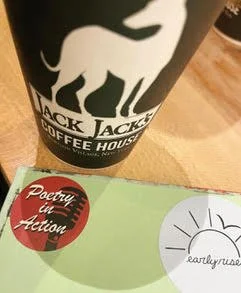
Sometimes that community is tangible. I create space and gather poets at the open mic that I host for the Babylon Village Arts Council at Jack Jack’s Coffee House in Babylon, NY (join us on the first Thursday of every month). Sometimes that community is virtual. After Roe v. Wade was overturned, NOW’s Suffolk, NY chapter responded by organizing a virtual poetry reading in support of women’s reproductive rights. I invited over a dozen poets to read. Some of them I knew personally. Many I had never met other than between the pages of an anthology we were published in (Choice Words: Writers on Abortion, Haymarket Books). Almost every one of them participated in the reading.

W. H. Auden wrote “For poetry makes nothing happen.” I disagree. My bio reads: “Her work explores the intersection of poetry and activism.” Initially, that referred to the subjects I wrote about. However, during my term as Poet Laureate of Suffolk County, NY (June 2023-2025), I moved activism off the page and into the streets (well, more accurately, into a coffee shop, a bookstore, and a farm) with events called Poetry in Action. With the help of the community and poets Rosa Todaro, Lisa James, and Steven Clifford, I organized two fundraisers for local charities, a volunteer event at a local non-profit farm, and a get out the vote postcard writing night. Poetry made something happen at these events: it brought people together to celebrate poetry and serve the community.

Sometimes the impact is less visible. I have many poems about breast cancer and have learned it is a radical act to write openly and honestly about cancer (particularly cancer of the breast; an external gender marker). But every time I read those poems, at least one woman in the audience connects with me to ask how I am, or to thank me for writing about cancer, or to share her own experience with illness. Recently a young woman said she had a lump in her breast and had been wondering if it was okay to write about it. I assured her that it was and encouraged her to do so. Maybe my reading made that one woman feel less alone and more empowered. Does that change the world? I’ll never know, but it’s meaningful to the two of us, and who knows how that small exchange may reverberate across the universe. (Update: as I was drafting this, that woman wrote and published the essay she was unsure about writing).

Silence is a tool of the patriarchy. Silence about discrimination, abuse, assault, or illness isolates and shames us. Poet Muriel Rukeyser wrote in her poem titled “Käthe Kollwitz”: “What would happen if one woman told the truth about her life? / The world would split open.” Let’s all continue to speak the truth. Let’s all stay aware. Pay attention. Bear witness. Write. Read poetry out loud in public spaces. Let’s keep telling the truth and trying to split this world open.


Deborah Hauser

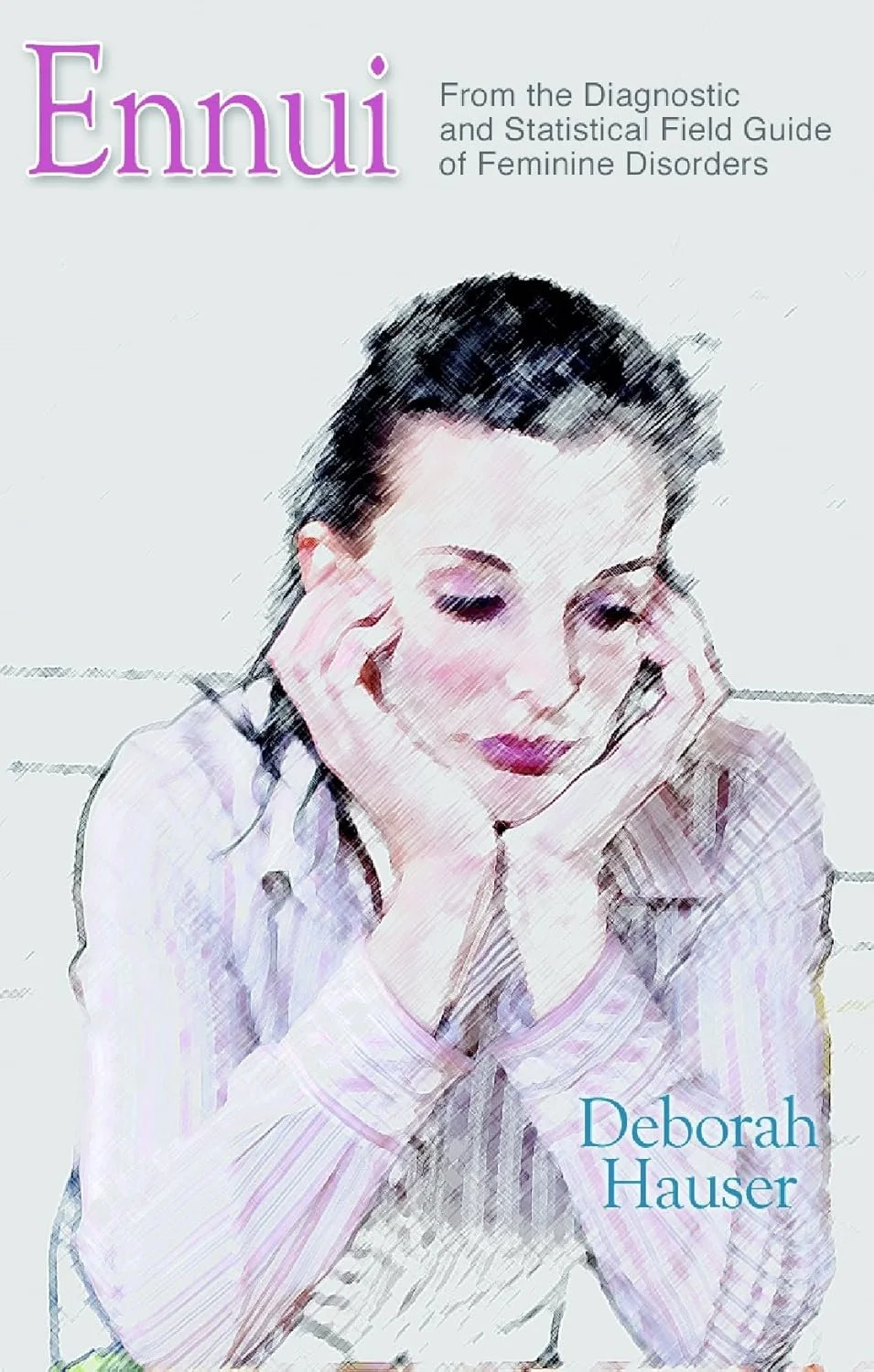
is the author of Ennui: From the Diagnostic and Statistical Field Guide of Feminine Disorders (Finishing Line Press). Her poems and book reviews have appeared in Ms. Magazine, Women’s Review of Books, The Kenyon Review, Prairie Schooner, Bellevue Literary Review, Calyx, and Academy of American Poets Poem-A-Day, and elsewhere. Her work explores the intersection of poetry and activism.

She has taught literature and writing at Stony Brook University and Suffolk County Community College. She curates and hosts a monthly poetry reading series at Jack’s Coffee House for the Babylon Village Arts Council, has served as Secretary and Board Member of the Suffolk County Chapter of the National Organization for Women (NOW), and is on the board of the Long Island Poetry & Literature Repository. She leads a double life on Long Island where she works in the insurance industry and served as Poet Laureate of Suffolk County, NY (2023-2025).


G&E In Motion does not necessarily agree with the opinions of our guest bloggers. That would be boring and counterproductive. We have simply found the author’s thoughts to be interesting, intelligent, unique, insightful, and/or important. We may not agree on the words but we surely agree on their right to express them and proudly present this platform as a means to do so.