Theatre and the Face of History

I’m a history geek. I’m also a lifelong theatre person. I think, as a child, dressing up and pretending to be people from the past was the closest I could get to actual time travel. In my twenties, I had an eight-year career as a female impersonator, performing three solo shows as Marlene Dietrich.

James Beaman as Marlene Dietrich. Photo: Stephen Mosher

Channeling a great historical icon is a heady experience, and a responsibility. My dream role of John Adams in “1776” brought out the history geek in full force—I even did my own video blog, sharing my research, from a trip to Independence Hall in Philadelphia to a tour of the archives at the Massachusetts Historical Society, where I held letters written by Adams himself. “1776” is, as I write this, completing a run on Broadway. This second ever Broadway revival of the musical was given a radical new life—all roles played by a racially diverse, cis- and trans- female and gender non-binary cast. It’s a powerful commentary on the piece, on the Founding Fathers and our own perceptions of our American history.

Did I love it? No. But the show itself, as mentioned, was a dream of mine and it was a dream experience for me when we performed at the Cape Playhouse.

James Beaman as John Adams

That said, the theatre is an interpretive art form! Great pieces can support all kinds of visions and concepts. Particularly when it comes to diversity in casting—and today we’re seeing a huge cultural movement giving artists of color, in particular, great opportunities to bring new life to the traditional repertoire.

Thanks to pioneers like Joseph Papp, the classical repertoire has, for decades, been home to actors of all races and ethnicities. As a classically trained actor, I’ve been proud to work in such diverse companies performing Shakespeare. The plays of the Bard unfold against epic tapestries of interwoven fact and fiction—his histories, in particular, play fast and loose with the truth in service to the drama. These vast plays, hundreds of years in performance and interpretation, cry out to inhabit a world as diverse and rich as our own.

From an artistic standpoint, it would be unfortunate not to acknowledge that the casting of an actor of color in a role traditionally performed by white artists, can have powerful impact on storytelling, symbolism and significance in interpretation. One of the best recent examples in the classical sphere is The Hollow Crown series from England.

This series incorporates the “Wars of the Roses” cycle of the three parts of Henry VI and Richard III. I’ve acted in the entire thrilling cycle twice myself. In The Hollow Crown, the most significant character portrayed by an actor of color is Margaret of Anjou, the French Queen of King Henry VI, referred to by Shakespeare as “the she-wolf of France.” Accomplished Black actress Sophie Okonedo portrays the character.

Sophie Okonedo as Margaret of Anjou

Margaret comes into the action of the play an outsider—in Shakespeare’s time, one commonly regarded as a villain. Okonedo’s race makes her Margaret seem foreign; we see her as the outsider/interloper she is. Now, a particular kind of person might argue that making a space in the series for one lead actor of color, and then having her play a wicked villain could be considered racist. Hm.

Well, I doubt that Ms. Okonedo would have taken on the role (a tour-de-force part, one of the best in the canon, in which she was brilliant) if she felt that the director and production intended to send a racist message. I surmise, rather, that she used the feelings of the outsider to build up in her imagination the resentments, the rage and the vengeful energy that the character of Margaret requires. Her casting was a potent choice. Was the choice “color-blind” or “color-conscious?” From a strictly historical perspective, it’s color-blind as Margaret of Anjou wasn’t Black. From an artistic standpoint, I think this choice was color-conscious in the best sense. It illuminates the play by bringing new dimensions to the character.

One of the most successful ways of enacting history in theatre, especially in the musical theatre, is the use of a framing device. For example, in SIX, the framing device is a rock concert. Each of the wives of Henry VIII steps forward to introduce herself to us and we are invited/seduced/led into a rock concert version of the world of Tudor England. Each of the wives is an icon, and the cast is racially diverse. In a way, SIX utilizes quite a classical device. It’s representational, like early Elizabethan plays in which an actor enters, and declares to the audience what character he represents.

The wives of Henry VIII in SIX

Where it gets tricky is when the audience is meant to accept the anachronistic racial identity of the actor playing an historical character without being “taken out” or distanced from the story. This is not always successful. Audiences sometimes make that imaginative leap, or suspension of disbelief. Some don’t. The live, performative experience of theatre can push these boundaries often more successfully than film. I speculate that we want to lose ourselves in a film. Especially historical films—I, at least, enjoy feeling like I’ve time traveled. As always, it’s always a matter of taste, yes? One of the best things about art.

When I first moved to New York City in the early ‘90s to pursue my acting career, I took part time work as an usher at Lincoln Center Theater, in order to see as much as I could for free. At that time, the highly touted new production of Rodgers and Hammerstein’s “Carousel” was playing. This was the production that introduced the world to an artist who would become one of our most luminous stars: Audra McDonald.

McDonald had just graduated from Juilliard, and was cast in the supporting but featured role of Carrie Pipperidge. I saw the show, from my perch in the back of the Vivian Beaumont Theatre, twelve times and I can tell you: each and every time Ms. McDonald started to sing “Mr. Snow” the audience went utterly silent and rapt; it was as if we’d been electrified. Audra was simply radiant, and her voice was the kind of voice that changes everything—like Betty Buckley and Elaine Paige had before her.
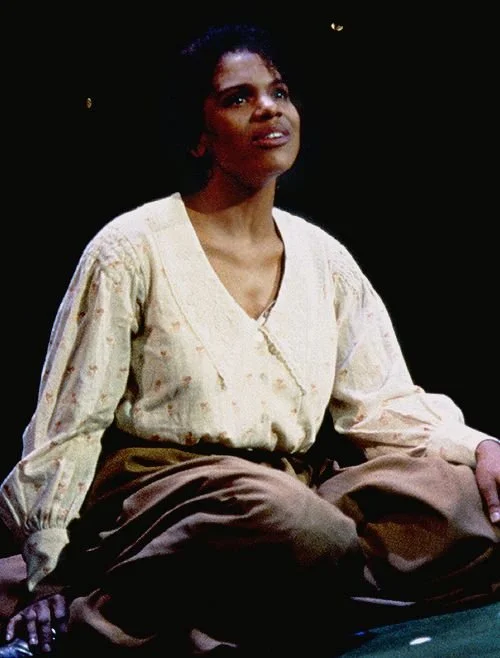
Audra McDonald as Carrie Pipperidge

Did we notice that Ms. McDonald was Black? Sure. Was it notable, different, perhaps surprising, to see a Black actress in the role? Sure. Is that a bad thing? Did Audra play Carrie like a 1990s version of a Black woman (whatever that might have been)? No. She played Carrie as a woman in Maine in the 19th century, as the play called for. Audra’s race wasn’t a distraction; it was simply one aspect of who she was. And because the actress was Black, Carrie was Black.

I saw it as simultaneously that simple, and that meaningful. My eyes were opened to a more racially diverse imaginary world that this classic musical could now inhabit. Even if, historically, a young Black woman of that time might not have been able to live the circumstances Carrie Pipperidge lived, the director, Ms. McDonald and the production invited us to take the imaginative leap. I also must mention that the great opera singer, Shirley Verrett, played Nettie Fowler, and her rendition of “You’ll Never Walk Alone” was for the ages.

The most magnificent example of a play being brilliantly reinterpreted for a black cast that I can think of? The Broadway revival (and subsequent film) of Horton Foote’s “The Trip to Bountiful.” The play is famous primarily for Geraldine Page’s Oscar winning performance in the feature film, in what would be her final film performance.

Vanessa Williams, Cicely Tyson & Cuba Gooding, Jr. in The Trip to Bountiful

In the Broadway revival, Cicely Tyson took on the role of Mrs. Watts, supported by Cuba Gooding, Jr. and Vanessa Williams as her son and daughter-in-law. The story of an elderly woman running away to see her country home once more before she dies translated—without a word of dialogue altered—vibrantly as a story of the Black experience. Small touches—the “Colored Waiting Room” sign at the bus depot—brought layers of meaning to the piece: what would the lives of these characters be as people of color? Brilliant.

At the end of the day, for me, and I think for good theatre in general: the play’s the thing. How do we honor the writer and their intent? How do we expand our audience’s ideas and challenge preconceptions while still preserving that which has come to be loved and cherished in our theatre repertoire and our American story? Thank goodness, we have the theatre—and brave, talented artists ready to try.

Headshot by Ryan Hunt

James Beaman has been a theatre actor for more than three decades. His many credits include Sir Robin in the First National Tour of Monty Python’s Spamalot; originating roles in new musicals Frog Kiss and The Road to Qatar! (cast album) and over twenty-five roles in Shakespeare. His eight-year career as a female impersonator took him across the country and to Europe. James is the winner of the MAC and Bistro Awards, and numerous other theatre honors.

James is the writer of The Girl in Green, a true story of murder in 19th century New York. His dramedy pilot, Wisenheimer, was the 2022 First Place Winner of the New York International Screenplay Awards. He holds a BFA from Boston University and an MFA from the Academy for Classical Acting at The George Washington University. He teaches and coaches performers of all kinds in New York City. www.jamesbeaman.com

G&E In Motion does not necessarily agree with the opinions of our guest bloggers. That would be boring and counterproductive. We have simply found the author’s thoughts to be interesting, intelligent, unique, insightful, and/or important. We may not agree on the words but we surely agree on their right to express them and proudly present this platform as a means to do so.

Why I Wrote Veil of Seduction

I’ve had a few people say to me, “Wow…did you really write this? I can’t believe you wrote this!” And somedays I wonder that myself. I wonder who that voice is, the unconscious self that spent months exploring her pain and hope and righting wrongs and flinging words out with all the passion of every lost flame and tortured soul she ever encountered. I grieved for my characters, I held onto them tightly, but after all is said and done…it’s time to let them go.

I’ve been putting this article off for awhile. Somewhat consciously, mostly unconsciously. But as the year (and my deadline) draw to a close…the pressure is on. That’s how I always felt I wrote best: under pressure. But alas, I’m already getting off topic. I’m here to tell you why I wrote my novel, Veil of Seduction. What it means to me. What inspired it and why it’s important to me. I wonder why it’s so hard for me to write about it. I suppose because its personal. Or all the things I wanted to say have already been hidden throughout the text itself.

Perhaps that’s why it’s taken me so long to write this article. In many ways, developing this story was not only about exorcizing the demons I’ve grappled with, but also understanding and coming to know the demons that are in me…that are myself.


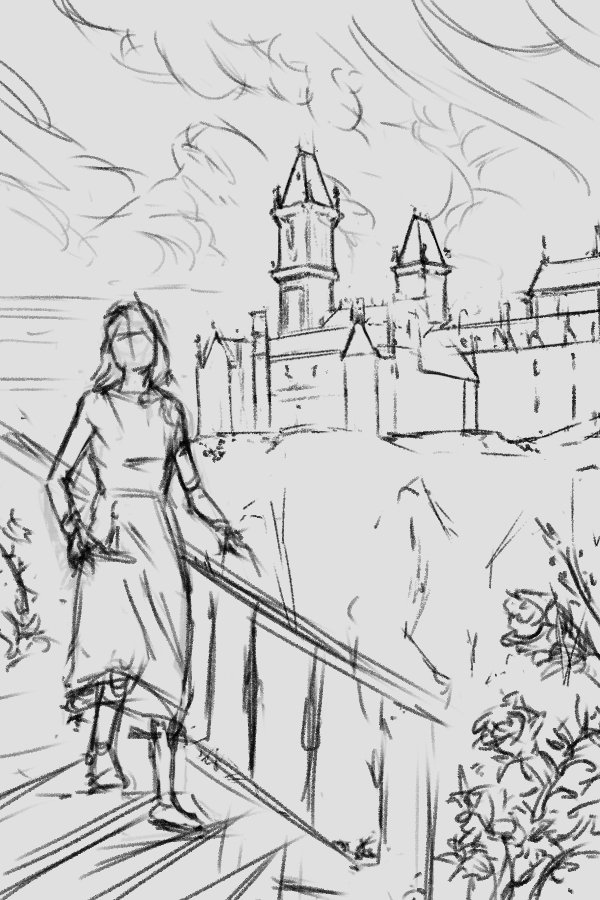
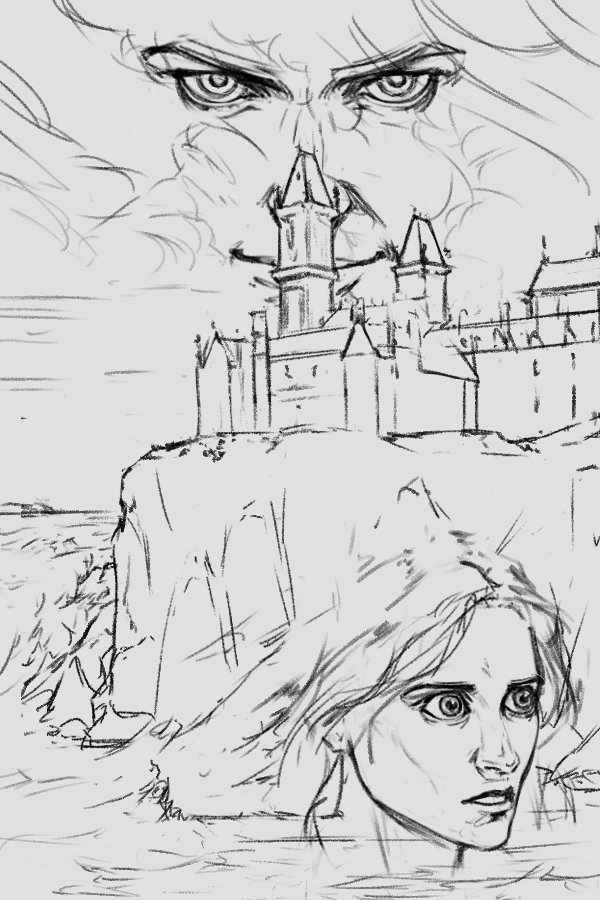
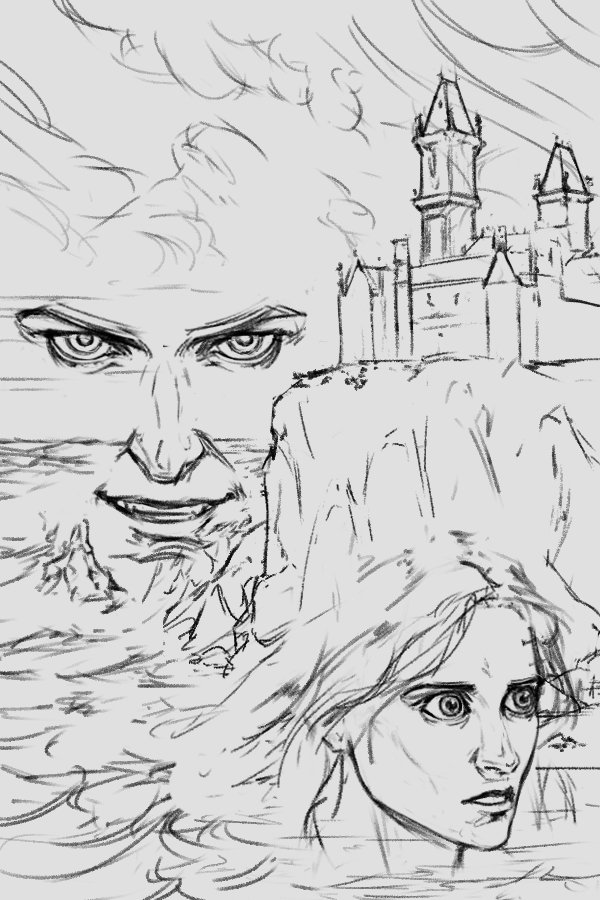
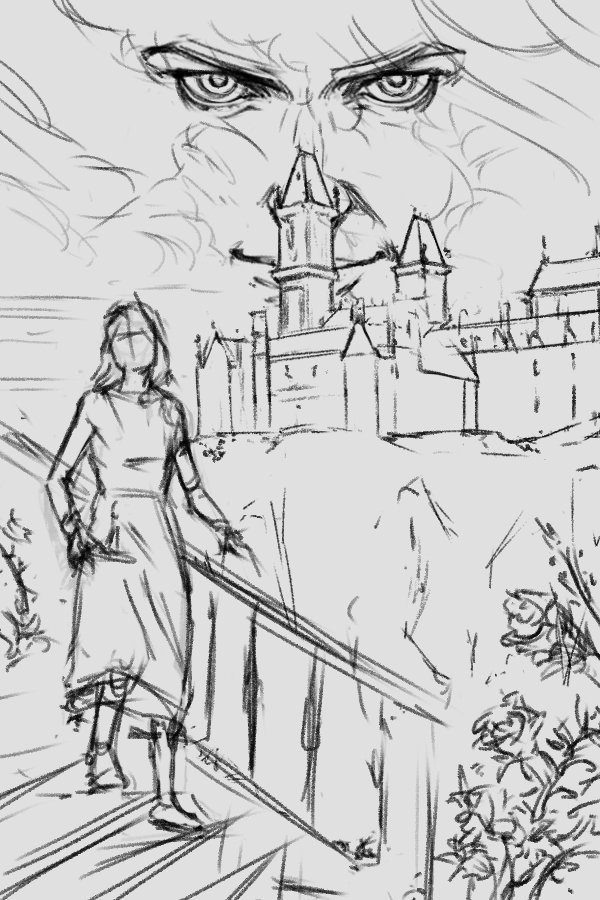
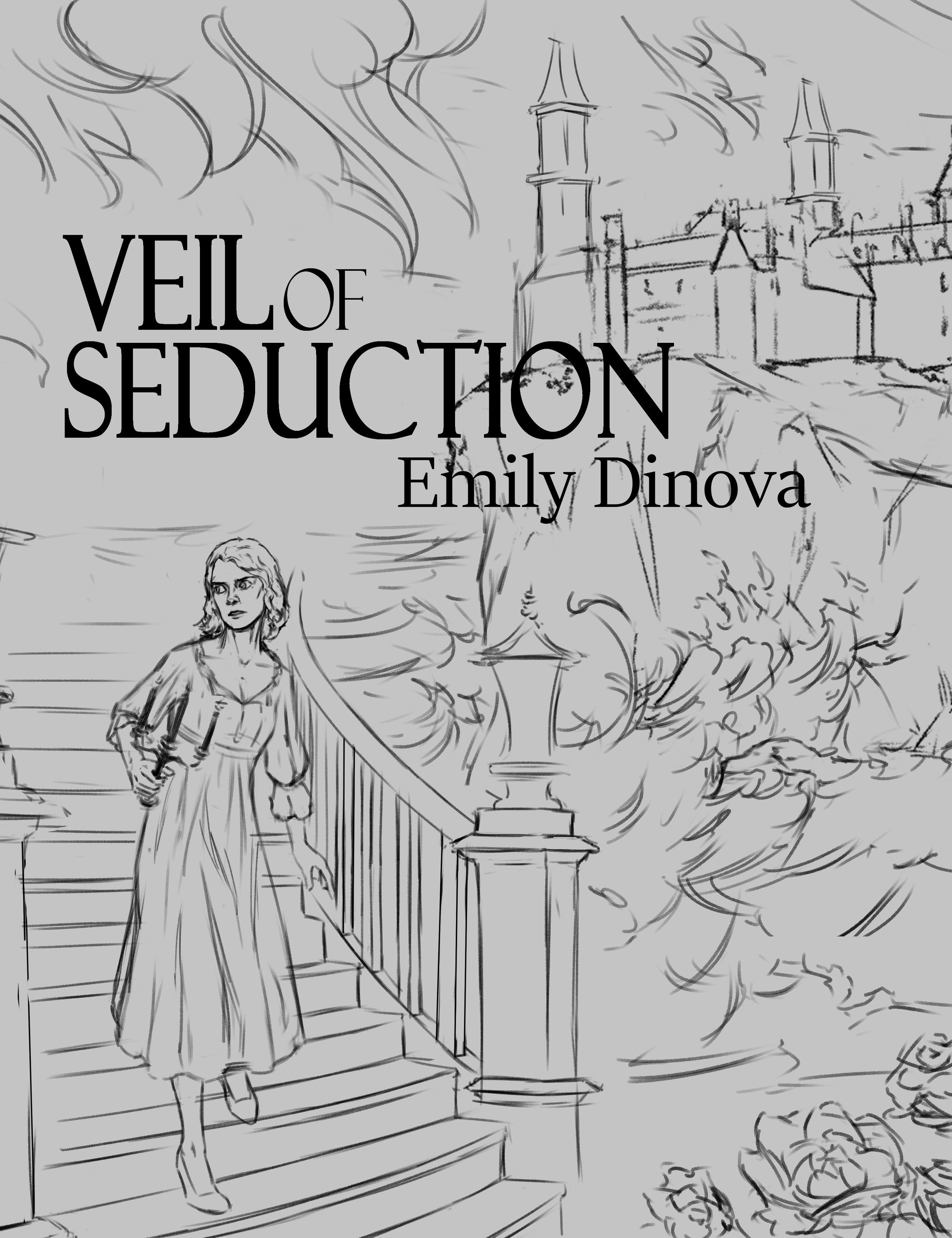
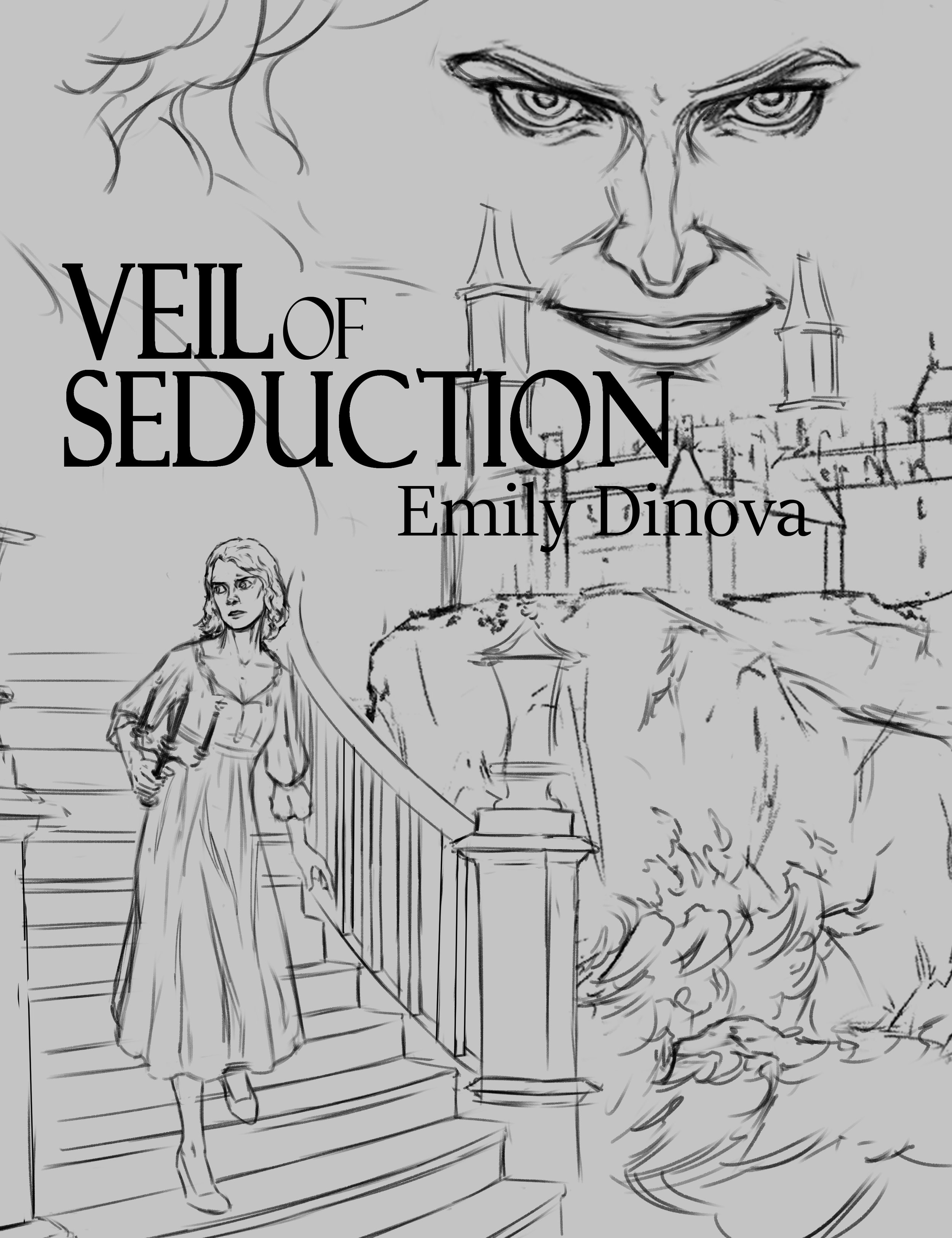
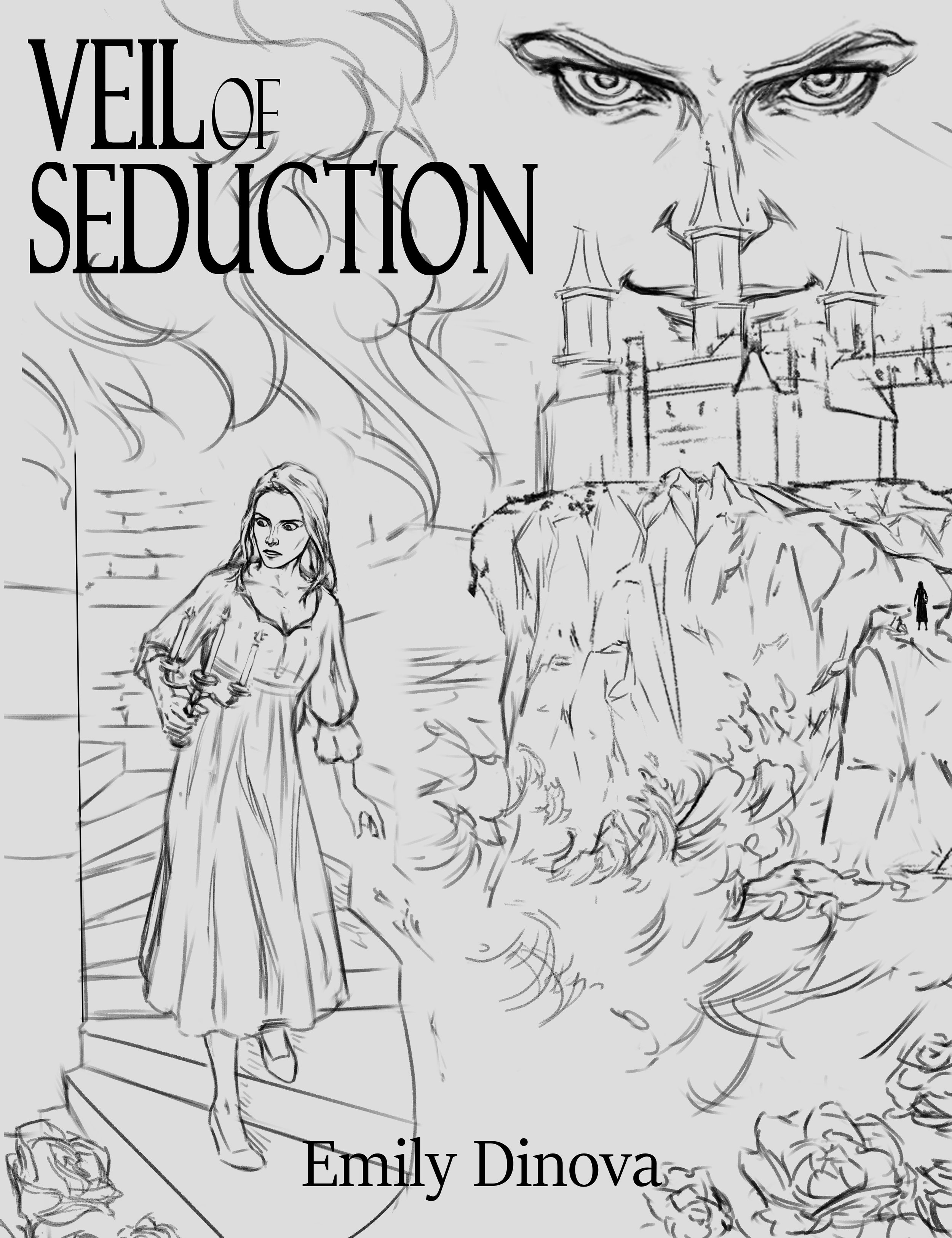
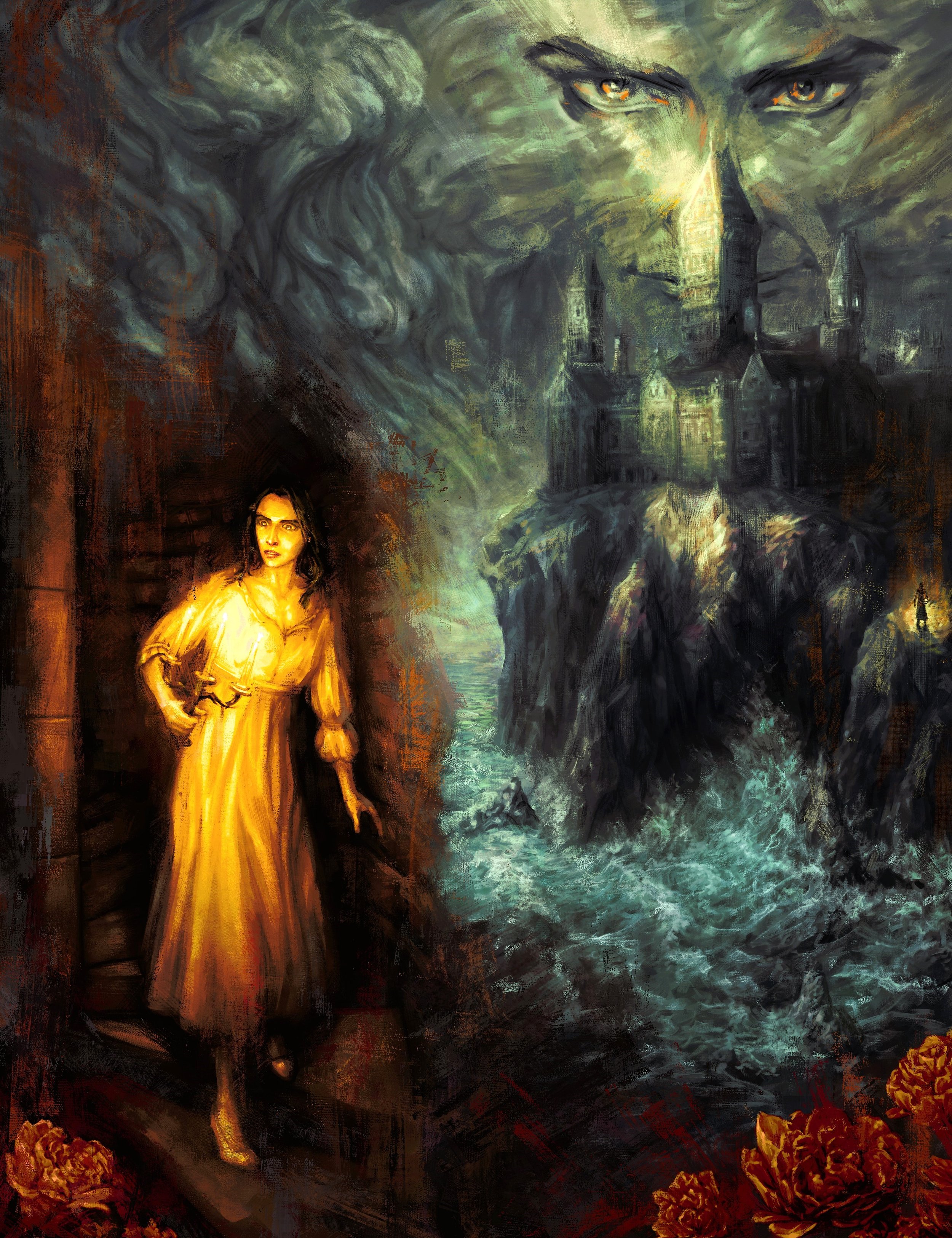
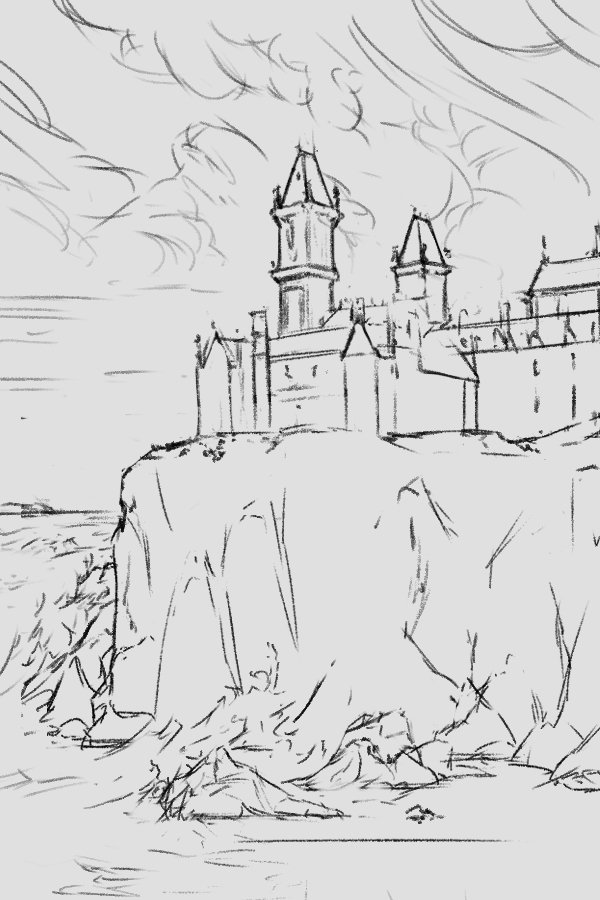
First looks at the original cover art and the progression of creativity! All original artwork by Lock.Wolfe


It all started with a conversation I had with my therapist. It’s hard to go into the details without giving away some spoilers but I’ll nevertheless try to be as thorough as possible. I spent a good amount of my life absorbing the energy of toxic people. I was naive, afraid of conflict and continually went out of my way to please others instead of taking care of myself. This is a pattern I was becoming more aware of and felt on the precipice of finally breaking. It was a connection I made to the many stories I had read as a young girl. Stories of bad men turned good by strong special women. I always wanted to be one of those women, and save every bad man I came across in the hopes of finding true love. But my views of romance and love were twisted, born out of abuse and domestic violence which left me trembling and raw in the aftermath of broken fantasies. I was tired. I was disillusioned. And I wanted answers to my behavior and the misunderstandings of romance, love, sex and everything in between.


When I set out on the road to healing, I knew the only constant provider of peace and reflection was my writing. So upon having one of those ‘ah ha’ moments during a particularly vigorous therapy session…I knew a story was on the horizon. One small string of words, which I cannot reveal without giving away an extremely important part of the plot, unleashed the monstrous and unyielding force inside me which was destined to write this novel. I found clarity in my subconscious and instead of acting and reacting, I began to think critically and rationally. I developed a mantra “Pause. Think. Act.” And I decided that my actions, my mistakes and the blindness that I experienced in my quest for love and connection needed to be explored. Not only to help close the bleeding wounds of my past, but also to help others avoid my mistakes and pitfalls. If not that, then at least to let my readers know that they weren’t alone and that many smart, talented and even extremely independent and successful people could fall prey to those who destroy and conquer. Alas, the fire was ignited and I was ready to burn. On this quest I also came to the very important conclusion that those who were out to incinerate the world and themselves were often the ones in the most pain, the people who needed the most help. However, my mistake had always been to sacrifice myself in order to provide that relief. Now, through the lens of a fictional world and the creation of my own characters, I was able to explore the ways in which humans sacrifice, lie, cheat, deny and even murder in order to avoid the thing that is staring them straight in the face—their fears…themselves.

I learned things about myself.

In case you need a quick synopsis :)


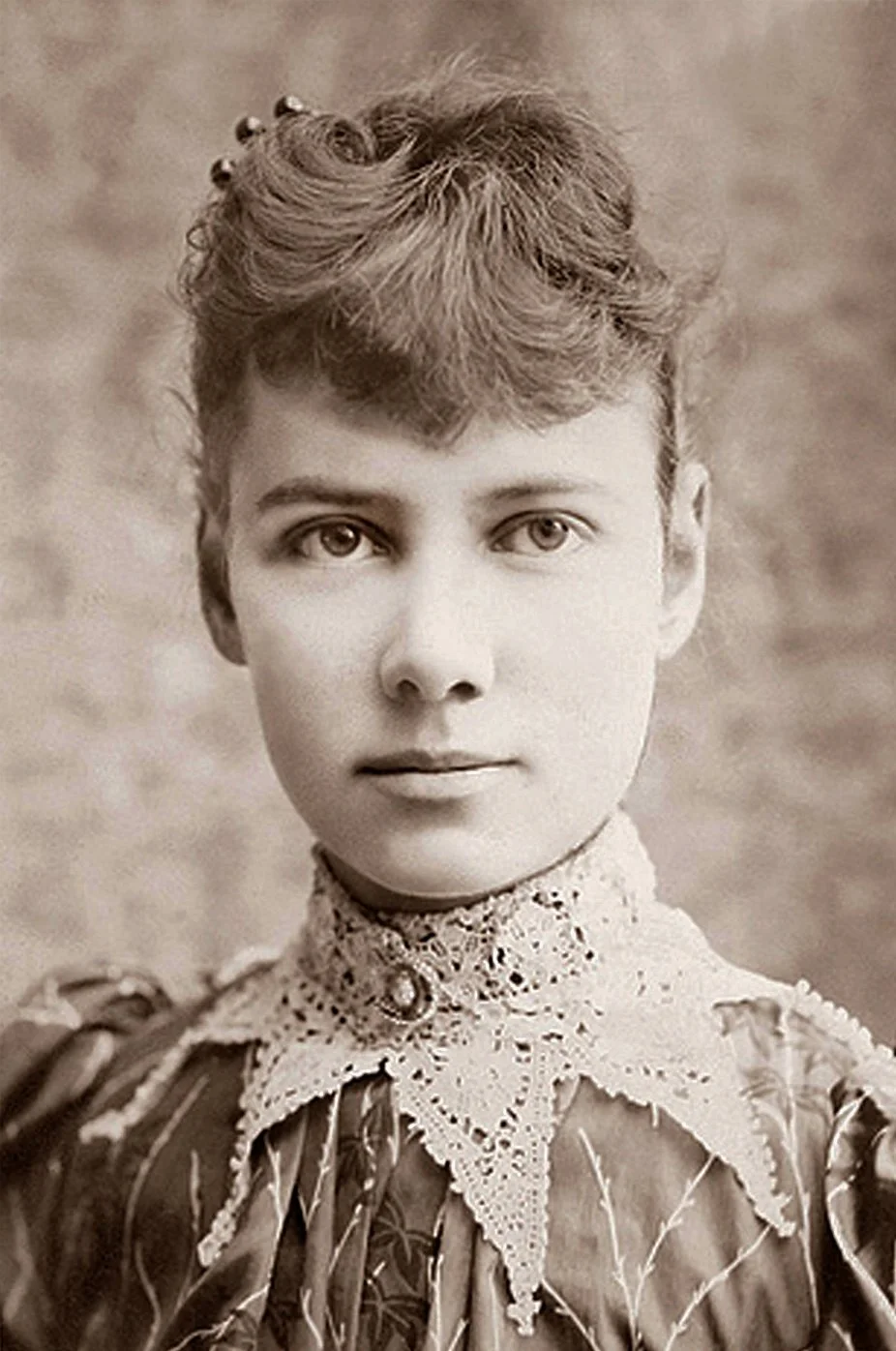
A lot went into this novel: inspiration, history and plenty of research. I spent hours compiling a great wealth of information on Nellie Bly, a journalist in the early 1900s who became famous after she went undercover and was institutionalized at Blackwell Asylum on the now Roosevelt Island in New York City. She pretended to be insane, was officially committed (after being examined by a doctor, judge and a police officer) and then began her investigation into the conditions of the asylum. Bly was pulled out less than two weeks later due to the horrific climate and wrote her exposé “Ten Days in a Madhouse” in which she contested that any sane person, and there were quite a few she met there, would be completely out of their mind after ten days of such horrendous and awful care. Her work and writing led to reform and further consideration of how patients were treated in state asylums.

Nellie Bly - American journalist, industrialist, inventor, and charity worker

Bly’s Exposé “Ten Days in a Mad-House”

I also spent time reading about the glorious history and ominous beauty of Newport, Rhode Island where I personally spent a significant amount of Summers in my youth. It is where Lorelei’s, our main character, journey begins. This was my starting point for diving into the dark side of the wealthy who resided there during the Gilded Age. I found plenty of research to develop, particularly in regards to the families who summered on the isolated island and the type of deboucharous parties that took place as well as the glorious architecture of homes like Seaview Terrace and the Breakers…it was nice to be able to breathe life into them and revisit them in the time periods in which they were in their grandeur, to uncover the delicious secrets and scandals that lay beneath the the glittering gold.

Seaview Terrace located in Newport Rhode, Island where the novel is set. This location plays an important role in the book!

Exploring the rich and gaudy juxtaposed and highlighted the wild gap in affluence that existed during this era, especially within mental health institutions and how care was distributed based on wealth brackets. This led me to more general concepts and necessities like economic, social and political happenings in America during the 1920s. This became an essential area of study; I felt that in order to truly understand the world I was creating, I would require a solid grasp of the issues which might affect the characters based on their locations, backgrounds and even their sense, or lack of, morality.


I don’t want to give away too much, but there was also research behind each character’s name, their backstory, where they came from and even the evolution of their beliefs. I spent hours creating a mythology to justify the twists and turns as I raced around every page wondering what lay next! As much as I prepared myself with a thorough outline, one of the many joys of writing is when you find yourself held hostage as your characters throw you for a loop and take you in a completely different direction than you originally planned. That happened with Chapter 26 (if you know you know!).

I am once again stalling as I draw closer to the core of my thoughts. It lays, very much at the heart of the story: the false delusion of the anti-hero and the through-line of narcissism that persists in villainy. The thing which I have again and again explored in my life with no resolution and constant repetition. Until now. Until this novel acted as a final confirmation to something I had suspected for quite some time. It pained me to do the dirty work of an author and break the ties that so fully bound me to my insipid belief that I could change others. That I could save those destined for destruction. The illusion has been lifted and I thought it would break me. But when I wrote the final lines of this story. I signed with relief. Things were different. I was different. And I knew someday, I, with Lorelei by my side, would be able to tell this story in the hopes that it would not change others, but allow them a new perspective on an old trope that no longer serves us as women, nor as humans.

It’s been a climb, a struggle, but I’m still here. Getting this book out was terrifying. The process was loaded with multitudes of rejection and self-doubt. Constant revisions and failures. Cries of joy and tears of rage. And I will tell you now, as I sit up much too late into the night continuing to write about this story, that it was so worth it. I love this story. If you ask me tomorrow, I might hate it. But right now, in this moment, I know writing it has changed my life. And I acknowledge that true change can only come from the self, from within.

My final thoughts. I lied to you. I have not let go of these characters. Not even close. So when you turn to page 323, don’t fret, there will be more coming your way.

Give you a hint? I couldn’t possibly. Nice try.

Write On,

E

The Small Moments: My Experience (Thus Far) With Zen Art

            In 2018 I was granted the Hemera Contemplative Fellowship for Artists and went off to the Zen Mountain Monastery for a retreat.

            I had never explored anything of the sort but was always fascinated with meditation and the Buddhist experience.

            The closest I came was probably my acting training. The foundation of the program was Suzuki, a post-modern Japanese movement technique. Basically, the method approaches text from a physical standpoint whereas Western trainings tended to start from the psychological. In Tadashi Suzuki’s seminal work The Way of Acting, he states that the exercises he created for his actors were “a means to discover a self-consciousness of the interior of the body, and the actor’s success in doing them confirms his ability to make that discovery. The actor learns to become conscious of the many layers of sensitivity within his own body.”

            Of course physicality and the traditions of Japanese performance are no strangers to one another; one simply needs to turn to Noh or Kabuki for evidence. It is said that such movements are akin to worship as physical performers call forth energy with their bodies to then ingest that vigor inwards, representing the maturation or fullness of that life energy.

            My own teacher, Maria Porter, trained with Suzuki himself in Japan and made it her artistic mission to fuse and repurpose this Eastern acting methodology with the trainings of the West.

            These vague (but related) connections were my only points of access, outside of various cultural depictions, to some aspects of Zen Buddhism, which commenced in China but later branched out to Vietnam, Korea, and Japan (of course Buddhism itself originated in India).

            Needless to say, I was intrigued to learn and delve into the Zen Buddhist lineage established by the late John Daido Loori Roshi. The monastery maintained that they were dedicated to sharing the dharma as it has been passed down, generation to generation, since the time of Shakyamuni Buddha.

            I didn’t quite know what that meant but I knew they offered something unique as part of the retreat: the opportunity to study Zen Art. I also really didn’t know what Zen Art was but figured it would somehow expand my knowledge and perspective in regard to my craft. 

            And so I went out into the peaceful woods, put away my phone for the duration of my stay, and approached the main building that at one time was a Benedictine monastery.

            I strolled through the meditation and dining halls until I found myself in the dormitory for visiting practitioners. I put my bag down not knowing what to expect. I took a deep breath. And I began my journey.

            Throughout the retreat I, along with numerous others, participated in all the customary happenings one might predict; we were woken up every morning by a gong, had vows of silence, ate healthily (and deliciously), learned meditative disciplines such as zazen, helped clean the residence, acknowledged our thoughts as we attempted to clear our minds, learned about the history and legacy of Zen Buddhism, engaged in liturgy, and inevitably did not reach enlightenment.  

            But it was the Zen Art, as I predicted, that struck me most. Zen priest Jody Hojin Kimmel, Sensei, taught the class.

            The session, at first glance, seemed quite elementary. We were painting pictures and they weren’t necessarily meant to be “good” by the standards of any certified art historian. We painted on instinct. We painted without looking. We painted without caring about the colors. We moved our brush not with a sense of purpose but with the pull of creative inertia.

            The cornerstone of the practice depended upon an artist’s willingness to feel a piece instead of planning it. I recalled instantly the acting note I would always receive in the early years of my studies: You’re in your head; get out of your head!

            And so I did my best. Little by little, I left my preconceived notions behind. I did not think what I wanted the piece to look like. I did not think about what I wanted it to say. I just painted.

            A sense memory emerged as my mind made a further connection to my old training. Theatrical performances that are in the Suzuki style often challenge audiences to recognize that the feeling a piece evokes supersedes the intellectual understanding of it. In this way, I felt a bit at home as this helped ease me into the concept of Zen Art.

            Hojin Sensei spoke of the relationships between artist and subject, artist and object, and object and audience. I found it fascinating.

            I painted one picture in particular that I deemed worthy of my attention. If you saw it, you would probably wonder which kindergartener drew it, but to me I looked at the piece and saw the universe, wonderment and possibility. I thought, in a way, it was a study of myself. Perhaps all Zen Art is. Perhaps all art is.

            I wish I still had it. Ironically I think someone mistook it for modern muck and tossed it accordingly.

            During the last night of our retreat, as we meditated in the zendō, we were told there would be a treat that not every group experienced due to scheduling. The Rōshi of the Mountains and Rivers Order, the abbot of the monastery, Geoffrey Shugen Arnold, would be seeing interested practitioners one at a time for a very brief encounter. We were given the opportunity to ask him one question, any question, and he would answer it. We quickly learned the ritual, the proper way to bow and kneel in front of him, and the conventional way to address and speak to him. We formed a seated line outside of his office and waited our turn, nervous that we were going to screw up the customs and formalities.

            His office was more like a miniature monastery. He sat in the center of the room; his body typified the characteristics one thinks of when imagining such a figure. I performed the procedure (aware that it indeed very much felt like a performance) and sat across from him. I knew what my question was going to be from the moment the opportunity presented itself. I was going to ask about Zen Art and its realistic implementation in film. After all, Zen Art seemed antithetical from a logistics point of view as a director and a crew tend to need to know what’s coming next. And so I asked.

            Shugen Roshi nodded his head and thought. He talked about balance, acknowledging the need for planning and practicality. But he stressed that I should find moments. Those small moments. Moments when I could let go and allow a course of action to unfold in the way it seemingly wanted to.

            At the time, I think I was disappointed in the answer. I nodded gracefully and thanked him.

            At the end of the retreat I felt refreshed and calmed. I walked out and headed towards my vehicle to find a dent. That’s right: my car had been hit in the Zen Mountain Monastery parking lot. Apparently, the universe balances out very quickly. I actually snickered in disbelief. The small moments. Luckily it was minor and the individual responsible gave me her name and information.

            On the drive home I wondered where the happy medium existed in film, the goldilocks zone of embracing the unplanned and accepting the spontaneous (that stretched far beyond improvisation) without jeopardizing a project.

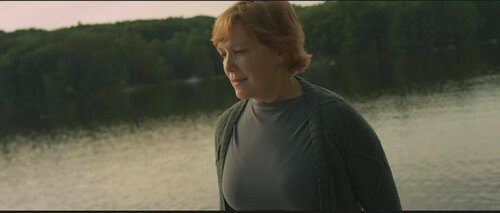
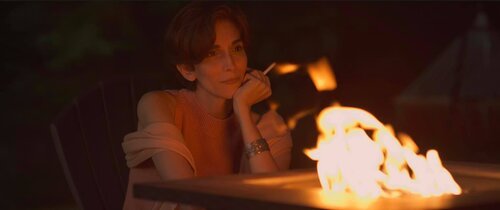
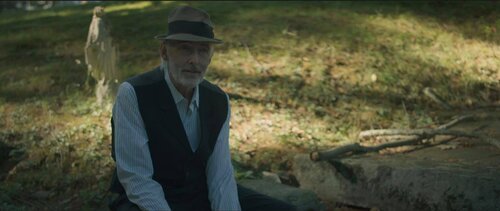
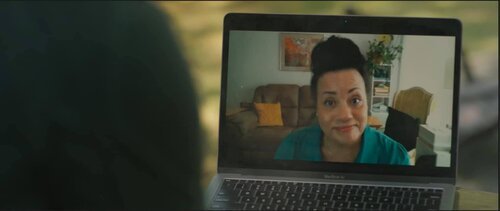
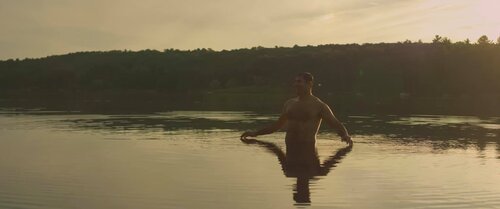
            Two years later, during the height of a pandemic, I received an opportunity to experiment with this concept when I was hired by Teri Hansen to direct her short film Into the Water. Of all the projects I had been a part of, this one seemed to lend itself most towards the liberating practice of Zen Art.

            Into the Water was a spiritual journey about a woman who ethereally encounters her anxieties, fears, ambitions, and dreams - for when there is seemingly insurmountable hardship, there is always hope. The film’s themes include rebirth, self-examination, and the ever-blurred relationship between endings and beginnings. It was very much inspired by the Buddhist concept of Bardo.

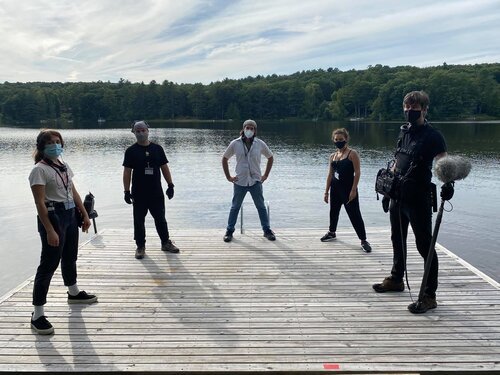
And so, when filmmaking seemed to be at a momentary standstill, 19 ambitious artists, including a handful of Broadway actors, went to a lake house, followed all the newly created health guidelines, and made a union-approved movie.

            This was the first film I directed where I did not pen script. It was not my story. It was Teri’s and it was personal to her. She was the producer and lead. I would have normally been far more specific and stringent with what I envisioned but I found for the first time that was not truly my job; my job was to try and understand her vision and attempt, to the best of my ability, to bring it to life.

            I found my naturally less personal relationship to the material, in some sense, freeing. I just let things roll, pun very much intended.

            I started to judge the performances and sequences not through my usual lenses of discernment and continuity but instead through a connectivity of sensation. I sought out the small moments - moments of impressions and evocations. They became my cinematic chaperone, guiding me towards the truth of a scene, the truth of a character, and the truth of a moment.

            Interesting to note, Zen Art wasn’t the only inspiration I drew from for this project. I also channeled my inner Werner Herzog (I didn’t even know I had an inner Wener Herzog). I knew our schedule required us to often shoot in a single shot to save time and thusly we were going to avoid shooting for coverage.  Who better than Herzog for such an approach? The unchained freeness of flow of the camera and its relationship to the image has been a trademark of Herzog throughout his career and that technique seemed to mesh well with both what we were attempting to create and Zen Art itself. As the director himself has said, the goal is to capture “only the truly intense and the remarkable.” Perhaps the New German Cinema pioneer had been a Zen Artist all this time.

            I often think to myself – what’s next in my Zen Art journey? How can I build off that singular experience? Surely every project could benefit from a touch of that artistic independence. I constantly attempt to balance such unrestraint with self-imposed constraint. The mere thought tends to spiral me into vexation.

            At such times, I think of Shugen Roshi and the way he nodded his head and thought. I think how he spoke of balance; the need for planning and practicality. I think about what he stressed: those small moments. I think about letting go and allowing my art to unfold in whatever way it wants to.

            At such times, I am not so disappointed in his answer. Though often solitary in such recollections, I nod gracefully and thank him.

Onwards and Upwards, Always,

G

Sweatsedo: A Journey Into Burlesque

It all started with my “sweatsedo”.  My burlesque career really started before that with some community theater and a couple of dance acts in some pole dancing shows but the “sweatsedo” feels like a great place to start.

Let me start with a little bit of background on me.  I am a retired Army CID agent.  I did 20 years in the Army, mostly as a special agent in the Criminal Investigation Division, which means I wore a shirt and tie and worked a lot of rapes.  I ended up becoming a forensic science officer and specialized in death and sexual assault investigations and got really burned o,t after a few tours in Iraq and endless suicide investigations.

I once made a joke on social media that I thought it would be funny to wear a tracksuit to a wedding and when asked about it, to be all matter of fact, I said,  “Well of course I’m wearing a tracksuit.  This is a wedding, right?” 

My old Army friend, Scott, contacted me when he was getting married and asked me to be his best man.  He insisted I get a tracksuit and shared the “sweatsedo” website with me.   There were some more low key tracksuits on there that I suggested to him because they were the cheapest and he was paying for it but he suggested I go with something fancier.  I ended up getting this beautiful purple velour tracksuit with gold fleur de lis down the sides of the sleeves and pant legs.  It also says “SWEATSEDO” in big letters across the front.  During our discussion about getting a wedding tracksuit, I also joked around about how I would turn the pants into tearaways so I could strip out of it if necessary, mostly as a joke at the time.

Olympia, Washington has this incredible artist, Elizabeth Lord, who has an annual variety show called “Lord Franzannian’s Royal Olympian Spectacular Vaudeville Show.”  Our paths crossed doing community theater and I saw that she was holding open auditions. I showed up with my tracksuit in hand and an idea.

I’m a huge hip hop head going back to the late 80’s when, as far as I’m concerned, it was some of the best music going.  I’m also a karaoke guy and have sung “Going Back to Cali” a bunch of times and at some point while singing it, I got an idea.  It has that chorus, “I’m going back to Cali, Cali, Cali.  I’m going back to Cali……hm, I don’t think so.”  It was a perfect tease line for a burlesque act.  I could play with lowering my zipper during the first part of the chorus and then raise it back up during the “I don’t think so.”  I also envisioned a handful of props (which is common; early burlesque performers use lots of props!!!).  The biggest and most important prop was the suntan lotion, which is mentioned in the final verse of the song.  I cleaned out a bottle of suntan lotion and replaced it with plain yogurt.  I would finish the act by doing some mock fellatio with the bottle and then squeeze and blast it into my face for the money shot.  I would lick it off my face and fingers while dancing and everyone would go nuts.

At the audition, I played the song and just explained my ideas.  Luckily, there was a burlesque performer, Wednesday Du Monde, at the audition who heard my idea and offered to help by sewing snap tape into the pants.  She also made me two pairs of pasties, one purple and one gold, and took a plain black g-string and sewed some fantastic purple and gold fabric to the outside of them for me.  I used the karaoke track of the song and sang/rapped the verses when I did the act.  I did the show and brought the house down with the act.  I’m a huge Missy Misdemeanor Elliott fan so at the time, I performed as Mister Meanor.

There was another burlesque performer in that show, Zsa Zsa Bordeaux, who did an incredible burlesque duo with Wednesday Du Monde dressed as a sexy Ernie and Bert stripping to a Sesame Street song.  She was part of Rock Candy Burlesque, one of the two burlesque troupes in town, and other performers from the troupe that I did not know attended the show and saw the act.  After doing the show, another burlesque troupe (Twin City Tease, now the Hub City Shimmy) from a city south of us booked me to do that act on this amazing theater stage in Centralia, WA.  When I was booked, I made the decision to change my name to Bananas Foster as it’s an insanely delicious dessert and as nothing I’ll ever do on a burlesque stage would be “mean” and so my original name did not work. I also submitted video of the act and was booked in the Oregon Burlesque Festival which, looking back, was a really big deal as they are highly competitive and hard to get into, generally speaking.

Members of the aforementioned Rock Candy Burlesque were speaking with me during this timeframe and I had another idea that I pitched to them and they booked me as a featured guest performer. 

It worked out perfectly as they were doing a show with the word “Time” in the title and my act was to do a strip tease as Doc Brown from the Back to the Future movies. I got a lab coat and some yellow scrub like pants that could pass for a nuclear suit.  I already had a ridiculous Afro so I used spray to further whiten it and put on a pair of long yellow rubber gloves that were filled with glitter and nuclear symbol pasties.  The act started with Huey Lewis and the News “Back in Time” for about a minute of high energy dancing and then changed to “Time After Time” by Cyndi Lauder where it became a sensual and self-choreographed contemporary dance piece.  My final reveal was a shiny pleather g-string that a friend helped turn into a flux capacitor with those cheap plastic glow-stick bracelets and when they brought the lights down at the end, shined bright on the stage.

Rock Candy Burlesque was awesome and booked me just based on me explaining my idea and gave me notes on my act during a dress rehearsal.  The show went great and I met guest performers and not long after, they asked me to become a member. 

I was so excited, being fully invited into the burlesque world.  We did regular meetings and did big shows about every three or four months where we would come up with new acts. 

We also began producing a monthly show called Tassel Tuesday where many of us did new or old acts and we opened up applications for in-town and out-of-town performers to submit acts.  We encouraged other types of acts to submit and perform as well so it was a full on variety show but it would usually be mostly burlesque from month to month.  Performers from Seattle and Portland would roll into town every month and do acts.  It was a lot of work and also a lot of fun.  We would put together group acts for our big shows and group choreography.  One of the members, May B. Naughty, an amazing costumer and maybe the sweetest human being I’ve ever met, would help with my costumes.  I would explain an idea and what I wanted to do and she would find the fabrics either in Good Will bins or on an annual trip to Mexico at discount prices. She would only charge me for the supplies and never the labor.

Being a cisgender heterosexual male over 40 in a burlesque troupe with seven, and at times eight, other women was an incredibly enriching experience for me.  I had spent the majority of my life, up until then, working with other males in law enforcement in the military.  The first several years, I always felt like a guest performer and not a full member of the troupe but over time, I felt completely submerged.  They were my creative artist sisters and I loved all their witchy woman magic.  I was applauded by other troupe members for never taking up too much space in the backstage area and always being respectful.  I always changed off to the side in the green room and looked away when other performers changed.  We had incredibly beautiful and creative performers both in our troupe and as guest performers every month and I got to share the stage with them.

Near the end, things got more and more challenging.  We always tried to get a consensus on decisions but with eight people, all artists, it could get absolutely maddening.  There was also some drama between troupe members that led to members leaving.  It all started off feeling like a very loving and inclusive community but once inside, there was some ugliness. 

The pandemic hit right around the time I was thinking about leaving the troupe.  It led to the closure of the Rhythm & Rye, an amazing live music venue where we had many shows, and eventually the dissolution of our burlesque troupe altogether. 

Identity politics were at an all time high during all of this and I watched one of our members get cancelled on social media and within burlesque and I was done.  Members of my own community turned on other members for incredibly petty reasons and I was happy to put that aspect in my rear- view mirror.

I don’t perform as Bananas Foster anymore.  I did 15 or more different burlesque acts over a six-year period.  I also sang a few songs in shows including an original one I did with an old punk rock friend from my teenage years.  I performed in shows from Seattle to Portland and spots in-between.  It was amazing having a stage where you could create acts and then perform them and get paid.  I did community theater in Olympia, WA and almost never made a dime but in burlesque (and vaudeville), you could actually get paid to perform as an artist.   I became way better as a listener and team member after spending a lot of time being a talker and a leader.  I turned 50 during the pandemic and still have some regret that I never got to take the stage at 50.  I feel like there might be a time at some point in the future where I change my mind and submit to a festival or return to the vaudeville stage but for now, I’m retired from burlesque or at least as a member of a burlesque troupe. 

As far as performing goes, there is no greater rush than standing near naked in front of a packed house of an audience, all screaming and clapping for you.  I definitely miss that feeling.  I still have the Sweatsedo.


Bobby Brown is a retired US Army CID agent and current Washington State employee, originally from North Tonawanda, NY.  He lives in Olympia, WA with his wife, daughter and pugs.  In his free time, he is a karaoke host, actor, MC and bon vivant.

G&E In Motion does not necessarily agree with the opinions of our guest bloggers. That would be boring and counterproductive. We have simply found the author’s thoughts to be interesting, intelligent, unique, insightful, and/or important. We may not agree on the words but we surely agree on their right to express them and proudly present this platform as a means to do so

Music Connects

I am a voice teacher in training, an actor, a language and travel enthusiast, and a person who plays the violin. I have always engaged in varied disciplines and often rejected the notion that we’re supposed to pick just one thing. For me, this multidisciplinary lifestyle works, but spreading my time and energy in several directions sometimes makes me feel like I’m not good enough at any one thing. However, at this point in my life, I have come to terms with the fact that I won’t be the world's best violinist. I just want to keep experiencing the joy of playing music despite the nagging frustration of knowing what kind of violin player I could be, if only I committed fully to it. There have been years where I “put in the work,” thinking I might pursue it full-time professionally, while other years I put the violin down for months at a time and thought about quitting for good. 


In order to maintain a sense of balance in my life, I had to change my mindset: I learned to regard myself not as a violinist, but as a person who plays the violin. Taking away the inclination to define myself by my violin-playing has helped me release a lot of guilt and anxiety around not putting in enough time. I used to think I had to give it all or nothing; if I wasn’t the best, I didn’t deserve to keep playing. I’ve learned how to let go – how to let playing music be a source of joy that ebbs and flows in my life. In releasing the pressure, I have discovered the greatest reason to keep playing: music connects. My violin has been a constant source for connection over the years – to people around the world, to audiences, and to myself. It’s a vehicle to express my own unique voice, and serves as another way to communicate with the world around me. 

Our voices are important – important enough to me that I am working towards an MFA in the Linklater Teaching Practice and Theatre Arts, in London. The Linklater teaching practice, in short, is a methodology developed by Kristin Linklater and helps actors find freedom in expression through the voice. I want to help others find and express their true and authentic voice. I find playing the violin is an extension of my voice. The voice expresses thoughts, feelings, and emotions, all of which represent a person uniquely and intimately. In my studies I have learned that vocal communication happens when the impulse or need to communicate triggers breath intake, and the vocal folds oscillate to create sound on the way out, resonating in the bony hollows of the chest and head. We can look at playing an instrument as the same process, but instead of the sound beginning in our throat, our arms and hands and and fingers play upon strings, keys, frets, or buttons. Everything I play on my instrument traces back to me, which I have learned to value, even if it doesn’t sound perfect. 


Despite being in London to study voice, I still felt the desire to keep playing the violin. Coincidentally, there happened to be a traditional Irish music session at an Irish pub near my flat. A huge part of my violin background is in playing traditional Celtic music. Irish music sessions are typically considered open jams, welcoming any Celtic players, although they don’t always feel very welcoming. This group of warm individuals, however, welcomed me with bright smiles, hearty laughs, and many pints of Guinness. Every Sunday I took up my spot between two stellar traditional players and Irishmen: Foxy on the banjo and John on the accordion. I listened and laughed as they swapped hilarious stories of playing music in London and Ireland from before I was even born. They told stories about the very people who composed the tunes I played my whole life, providing an entirely new insight into the music I thought I knew. I began to understand how important storytelling is to the Irish – how much they value a good hook-line and sinker. I started to see the music as a means of storytelling for the Irish community, as if the music is their legacy to pass on to future generations. 

In my life, music has been a consistent thread through nearly all of my most memorable experiences. When I leave it to pursue something else, it finds a way back into my life. I have learned to release the pressure around it I used to hold, and I’m so grateful for all the people and connections it has brought into my life. I’m allowed to keep playing even if I’m not the best. Our voices are beautifully unique, and people want to hear what we have to say, in our own special way of saying it. We can let go of the need to sound perfect. I am not defined by my instrument – I am a whole human that has so much more to offer. As long as we boldly share ourselves through each of our respective art forms, letting our own unique voices come through, we invite connection wherever we go. 


Casey McGinty is an actor, musician, and voice teacher in training. Casey is a graduate student at Rose Bruford College (London) working towards an MFA in the Linklater Teaching Practice (Voice & Theatre Arts), as well as becoming a Designated Linklater Teacher. In 2020, she directed The Vagina Monologues at ArtsQuest in Bethlehem, Pennsylvania and has performed as Donna in Tony & Tina’s Wedding (Bethlehem and New Jersey productions). Casey is a Celtic fiddle player and has played regionally with PA bands including Fig for a Kiss, The Groove Merchants, and Bovine Social Club. She recently performed in London at the British Country Music Association Fan Fest. 

G&E In Motion does not necessarily agree with the opinions of our guest bloggers. That would be boring and counterproductive. We have simply found the author’s thoughts to be interesting, intelligent, unique, insightful, and/or important. We may not agree on the words but we surely agree on their right to express them and proudly present this platform as a means to do so.