
“Rather, I think one should write, as nearly as possible, as if he were the first person
on earth and was humbly and sincerely putting on paper that which he saw and
experienced and loved and lost; what his passing thoughts were and his sorrows and
desires.”
-Neal Cassady in a letter to Jack Kerouac
Years ago, when I first attended college and started to study writing poetry, a friend said, “What God left out, man cannot fill!” I believe he meant that writers are born to write and anyone can take classes on how to write, but only if it is in one’s nature will that individual be successful. Now to be successful, a poet must invest their self into the art and this involves ego, drive and dedication. Talent alone does not guarantee success. A poet must believe in oneself but be open minded to criticism and at the same time be true to the voice within. And by doing so one must be willing to work hard at honing craft to make work into art. This investment also involves reading, writing and revising for as long as one chooses to be a poet.
I appreciate many types poetry and we are now deep into the information age, constantly bombarded by fast paced instant images, driven by media where the written word has been cast aside for scene and sound. While poetry does have an oral tradition, audiences are more prone to expect fast-paced quick-rhyme verse acted out in a performance that may sound great but put on paper it does not reads as well. I prefer poetry that translates and provides the same impact written as well as spoken.
No true poet can achieve critical acclaim for their work without knowing how other poets from the past honed their craft. The use of mode, form, style and language from other times and cultures are essential to help create new poetry. Every major poet has looked back to see what others have done before them. Poetry, like all art forms, relies heavily on tradition, but poetry, like all other art, is not static; it changes and evolves.
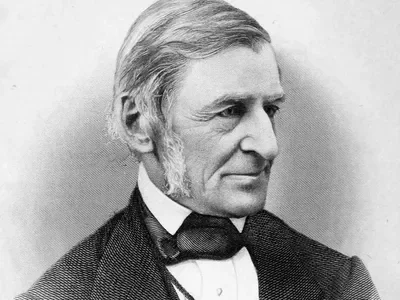
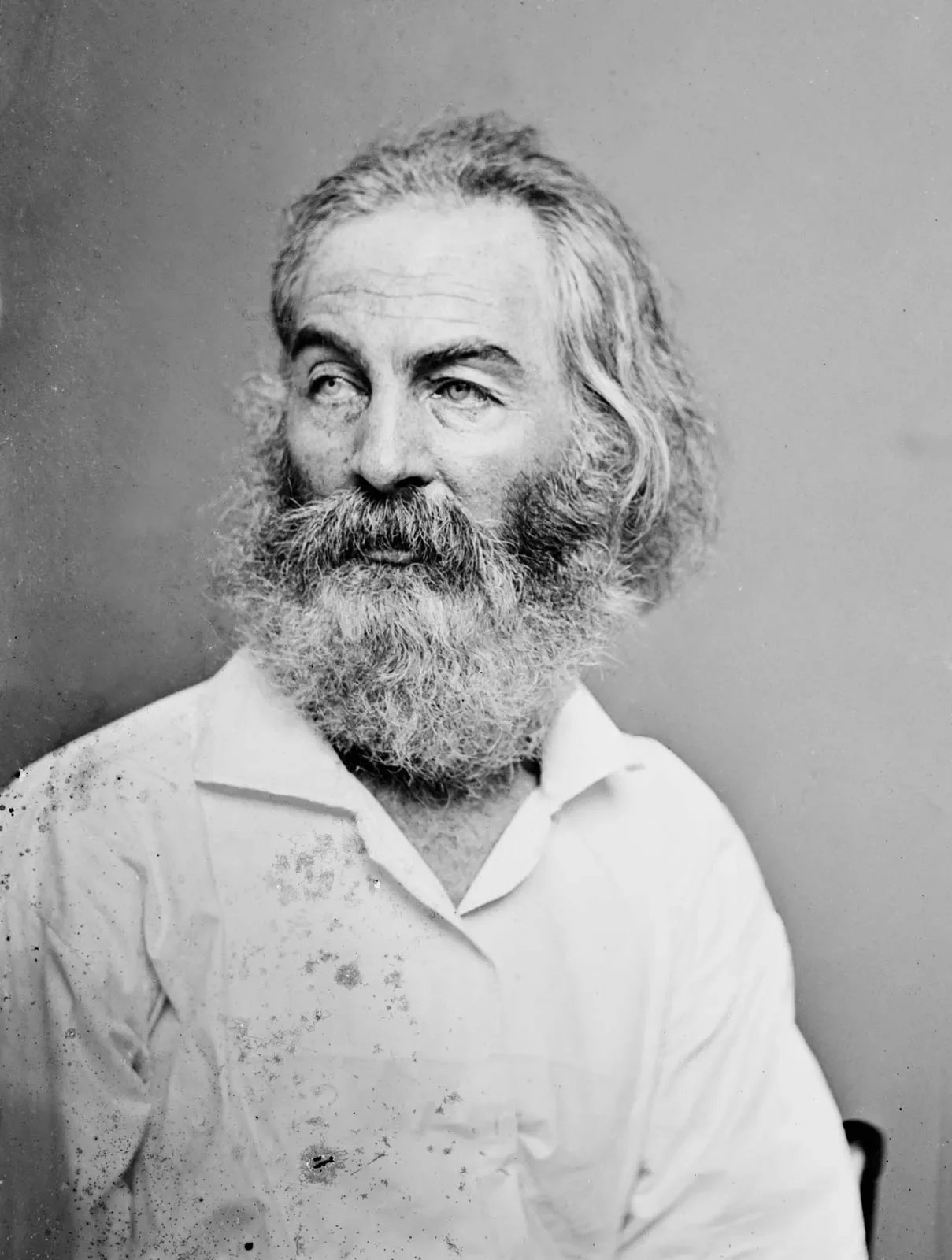
The roots of my poetry go back to Walt Whitman, who answered Ralph Waldo Emerson’s call for an American poet of the people; to become a national icon who will be like the poets of ages long ago and point out man’s spiritual and physical connection to nature. The strength of poetry lies in its use of language, the common or colloquial tongue, the ability to release inner realities, and to inspire an audience or reader. The style and form of the poem do not matter if the content and message are clear. Walt Whitman’s poetry can be seen as a break from the Standard English “tradition.” Whitman did this to emphasize America as new country with new and independent ideas. His use of long lines and free verse had been used in ancient Anglo-Saxon poetry and Hebraic biblical writings, reflecting some roots to the past.
I listen to and read these poets, the ghosts who have come before me; those who never refused to face the struggle which I believe is needed to keep working on art. I have read many poets and been inspired by their works: William Carlos Williams for his experimentation with minimalism and image, Allen Ginsberg, Jack Kerouac, Lawrence Ferlinghetti and many of the other Beat Generation poets for their counterculture influence. I’ve read Charles Olson for his Projective Verse, T.S Eliot, Ranier Maria Rilke, Federico García Lorca and many more for their views on poetry itself. I may not always agree with them, often finding their opinions outdated, but I sit down and open myself to the words of poets past and discover they too always took risks, and the creation of art comes with a little death.
“The artist, and particularly the poet, is always an anarchist in the best sense of the
word. He must heed only the call that arises within him from three strong voices: the
voice of death, with all its foreboding, the voice of love and the voice of art.”
— Federico Garcia Lorca
Different writers, artists and poets will call the creative process different names. Some have called it tapping into one’s imagination, other refer to it as the subconscious and dream state. Rainer Maria Rilke believed true poetry rises from conflict between the conscious and the unconscious or what he called “the hidden insanity.” And still others reach into the darkness of their being or, as Lorca called it, Duende.
But, what is Duende? There is no true English translation for Duende. Someone might tell you the Spanish word translates literally to “master of the house” and that someone might also tell you it has something to do with the emotional spirit of art itself. But experience is the only way to truly understand what Duende is. One cannot understand light without experiencing darkness or find one’s humanity without seeing one’s own animalistic nature and one’s place in the natural world. So maybe, Duende is akin to the Higgs-boson “God particle of creation,” the life force from the primordial ooze that exists in the physical and metaphysical realm of quantum mechanics, Schrodinger’s cat that is both dead and alive at the same time. Duende is theoretical, but a truth that is as elusive as finding absolute proof of its existence, because it appears to be a necessity to answer the question of how to create true art. There is beauty in darkness. I believe Federico Garcia Lorca would agree.
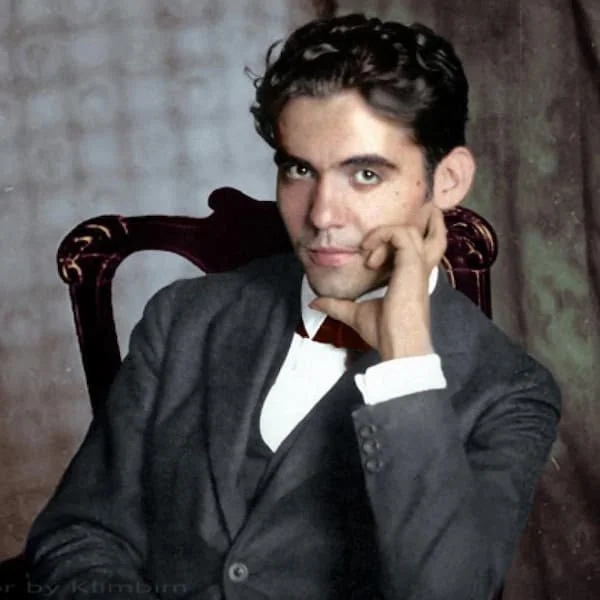
Lorca agreeing.
Whenever I set out on the task to write a poem, I sometimes find myself embarking on a journey of exploration. There might be a destination I am trying to reach, be it with the subject matter or the form I wish to use to present my work. I sometimes write prose without structure to get my ideas down and then go back later to try to put them into poetry form. At other times I free write using words that I have collected from crossword puzzles, newspapers and magazines that I have stored and try to form phrases that I weave into sentence, images and poems. Frequently while writing, I smash words together to create strange and disparate images in my poetry. I believe in writing what comes to mind without constraint from anything except the depth of imagination.
However, while in the process I tend to meander and change direction and word choice. Sounds may force me to rethink form as well as the flow of words and thought may lead me to an epiphany and cause a reversal of direction, creating a new objective. Someone once said that the poem that one writes has always existed, and it is up to the poet to bring it into the physical world. Once I have a poem or the beginnings of one, I put it down for a day or two and then come back and work on it some more. There are times when I surprise myself and complete a poem in one sitting but still return to it and revise as needed.
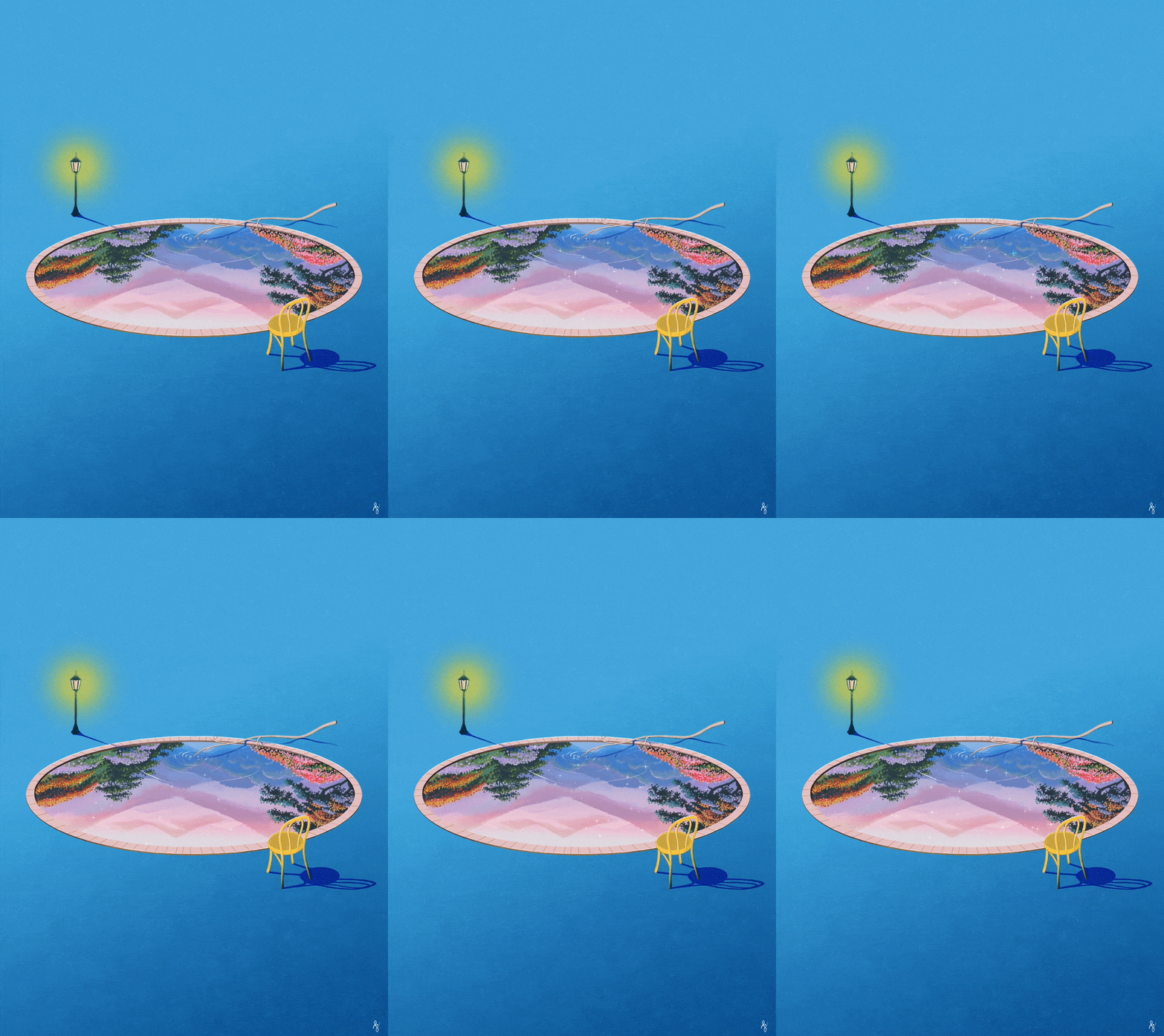
It’s also been said that true artists and poets slit their wrists to paint and write with their own blood. Writers and artists always take risks like an acrobat walking on a wire high above or a biker riding a motorcycle at break neck speeds inches above the pavement. Both are open to nature and the elements, defying gravity with a question of balance between life and death, taking that risk to accomplish a self fulfillment of their own needs. As a poet, I must look into myself. I seek answers and go out to ponder this riddle, sitting by an ornamental cement pond. I look past the ripples in the reflecting pool. Her image replaces mine. The face of a chiseled goddess, framed with fiery red hair, curls like a coital knot of snakes. Her dark eyes burn with desire. I am seduced. But her ruby lips part, revealing a gap between her yellowed buck teeth, a darkness, a blackness, an abyss. Reality and aesthetics appeared only to be a consensus of similar perceptions. I found Medusa suffers from an overbite.
All poets edit their work. Walt Whitman constantly revised and added to Leaves of Grass right up to his death. Allen Ginsberg proclaimed he used the “unedited first draft” but students of his have told me he meant the tenet, foundation, and thrust of the poem while tinkering and tweaking were needed from time to time. When revising, scrupulous examination of one’s poem must be used whether it be checking the correct use of comma, or a line break. I recite my poem out loud and listen to the rhythm and sound of words to establish a flow. I am always looking to improve my poetry to produce the best poems I can, so revising and editing my work is something I happily accept as I strive to remain a poet. As the poet Donald Hall stated, “If I don’t see for other people, then my revising is all in vain.”
My final advice to anyone choosing to claim the title of poet is just what I said at the beginning of this essay: keep reading, keep writing, keep revising be open minded to all things including criticism but always be true to the voice inside you...
My Reason
I write for those who go outside the box
and climb over the fence defying the signs,
Danger Keep Out, No Trespassing.
They are the ones who dance along the
precipice, doing pirouettes on the edge
of the abyss between the real and the ideal.
And as others have tried to bridge that
chasm with a structure made of old worm
holed planks, myth and magic tied with twine,
a string of lies, producing only an unfinished
catwalk that juts out like a diving board.
I write for those who will not take that leap
of faith, but use mortar, stone, and steel
in the here and now to span that gulf.
I write for those who live outside the lines
drawn by society, the biker, the hipster
and the burn out, those who don’t want
to live the life of the nine to five crowd,
wear stuffed shirts, a suit and tie, and be
a contestant in the rat race, running through
the maze looking for a slice of the American
Dream, that pie in the sky, that piece of cheese,
to be number one, the big cheese, a king,
an emperor, because they see the emperor
has no clothes and the cheese is Swiss
and full of holes. They see the Polly-O
String is dangling. I write for them.
I write for the musician, the artist, and the poet,
those who don’t want to go with the flow
of music. They seem to be tuned out or out
of tune but they follow a different beat.
They twist and shout, but they don’t dance
when others call the tune, or agree with
the choreography, it’s all hokey-pokey;
a big hustle to join the line and do the glide.
Call them wallflowers, I write for them.
I write for the outlaw, the outcast and the
outlandish. But they are not out of touch.
They are what they are and I am what I am.
I am a poet. I am on the outside looking in.
I write for myself.
Peter V. Dugan
Peter V. Dugan
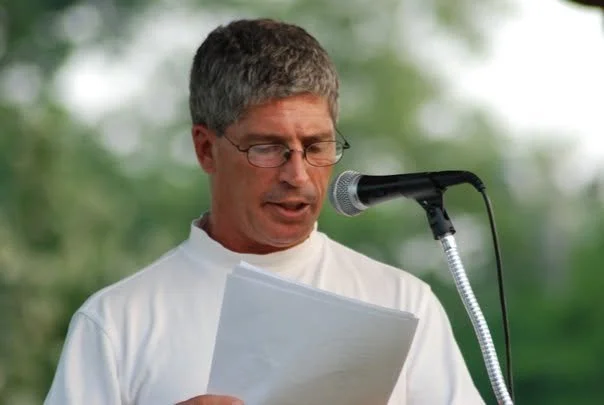
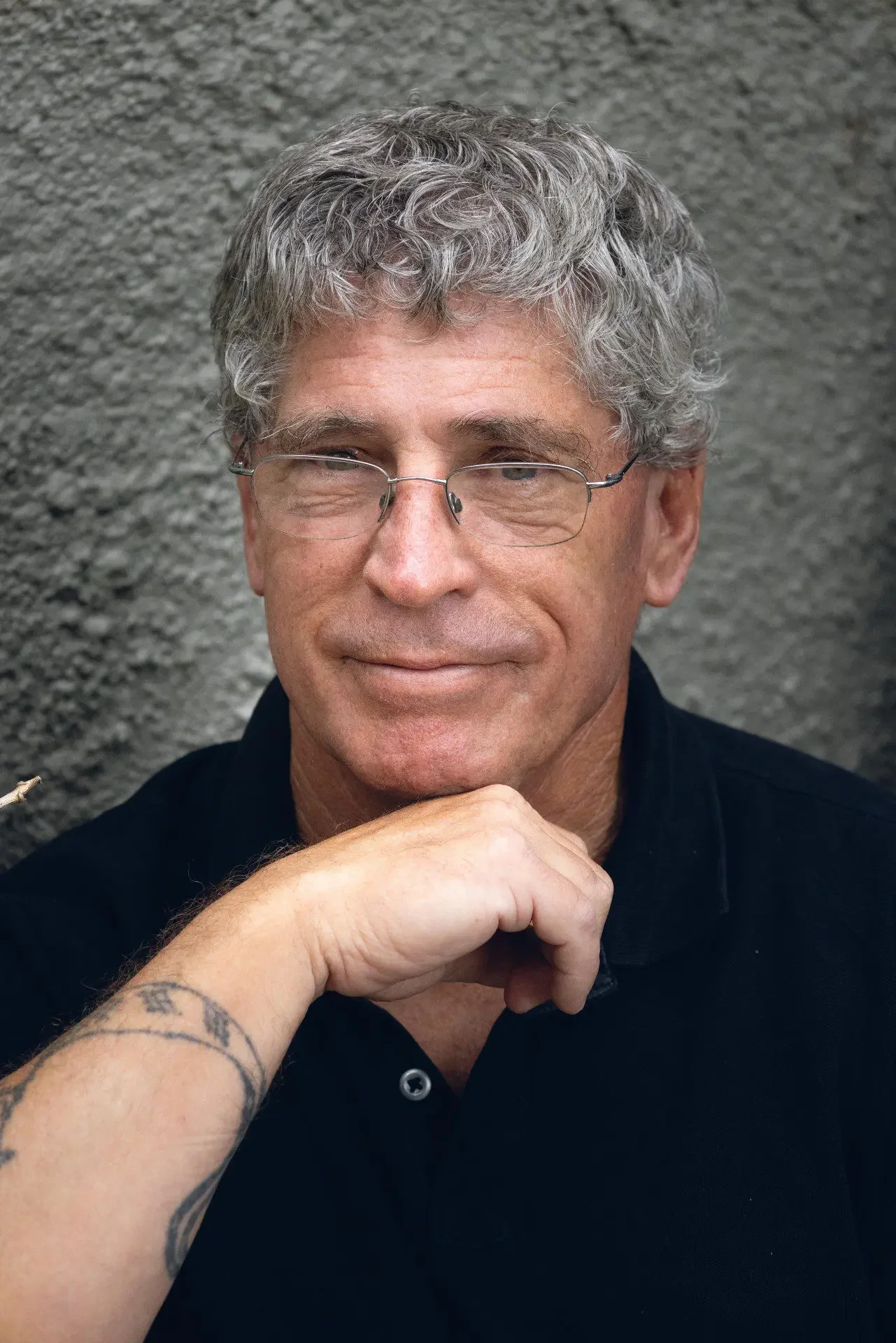
(Nassau County Poet Laureate 2017-2019 and 2026 Walt Whitman Birthplace Poet of the Year) was born and raised on Long Island. He is a graduate of Chaminade High School, Mineola 1976, Farmingdale State College, Melville, NY Degree: Associate of Arts and Sciences 1995, and The New School for Social Research, NY, NY. Degree: Bachelor of Arts.
He has published five collections of poetry and over the years, his poetry has been published in numerous anthologies and magazines both on-line and in print. Most notably of these are Grub Street Literary & Arts Magazine, Soul Fountain, Reckless Writing: The Modernization of Poetry by Emerging Writers of the 21st Century, 2012 and 2013 and Five 2 One Literary Magazine. His latest book is The Prowess of Immodest Emptiness New and Selected Poems published by Chatter House Press Sept. 2016. Online his work has appeared in Drunk Monkeys, @ Contemporary American Voices, Think Long Island First, The Long Island Quarterly, Aberration Labyrinth, Occupy Poetry and Verse Wrights.
He co-edited and formatted the Writing Outside the Lines poetry anthology, Wyld Syde Press 2012 and co-edited LI Sounds 2015 poetry anthology, Wyld Syde Press. In 2014, he was awarded the LI Bards Poet Mentor Award by the Bards Initiative and in 2016 two of his poems were nominated for the Pushcart Poetry Prize. Peter Dugan also hosts a reading series at the Oceanside Library on Long Island, co-founded Beats by the Beach, and is a member of the Long Island Performance Poet Association while attending many poetry events in the Long Island and Metropolitanm area.
G&E In Motion does not necessarily agree with the opinions of our guest bloggers. That would be boring and counterproductive. We have simply found the author’s thoughts to be interesting, intelligent, unique, insightful, and/or important. We may not agree on the words but we surely agree on their right to express them and proudly present this platform as a means to do so.